 KSOEM
KSOEM

Articles
- Page Path
- HOME > Ann Occup Environ Med > Volume 38; 2026 > Article
- Case Report Recurrent laryngeal leukoplakia in a cook occupationally exposed to cooking oil fumes: a case report
-
Kyung-Eun Lee1,2
 , Seong Won Ma2,3, Jiwoon Kwon4, Young Shin Lee2,5, Shinhee Ye2,6,*
 -
Annals of Occupational and Environmental Medicine 2026;38:e24.
DOI: https://doi.org/10.35371/aoem.2026.38.e24
Published online: July 1, 2026
1Suwon Health Checkup Center, Korea Medical Institute, Suwon, Korea
2Bureau of Occupational Health Research, Occupational Safety and Health Research Institute, Korea Occupational Safety and Health Agency, Ulsan, Korea
3Department of Occupational and Environmental Medicine, Osan Hankook Hospital, Osan, Korea
4Safety Policy Research Division, National Fire Research Institute of Korea, Asan, Korea
5Department of Occupational and Environmental Medicine, Hanyang University Hospital, Seoul, Korea
6Gangnam Health Checkup Center, Korea Medical Institute, Seoul, Korea
- *Corresponding author: Shinhee Ye Gangnam Health Checkup Center, Korea Medical Institute, 411 Teheran-ro, Gangnam-gu, Seoul 06160, Korea E-mail: shinheeye88@gmail.com
- Kyung-Eun Lee's current affiliation: Department of Research for Occupational Health, Institute of Occupation and Environment, Korea Workers' Compensation & Welfare Service, Ulsan, Korea
• Received: March 28, 2026 • Revised: June 22, 2026 • Accepted: June 23, 2026
© 2026 Korean Society of Occupational & Environmental Medicine
This is an Open Access article distributed under the terms of the Creative Commons Attribution Non-Commercial License (https://creativecommons.org/licenses/by-nc/4.0/) which permits unrestricted non-commercial use, distribution, and reproduction in any medium, provided the original work is properly cited.
- 1,107 Views
- 29 Download


Abstract
-
Background This study reports a case of recurrent laryngeal leukoplakia, a precancerous lesion, in a female cook with long-term occupational exposure to cooking oil fumes. In 2022, the Korean Epidemiological Investigation and Evaluation Committee determined that substantial scientific evidence supported the work-relatedness of the case.
-
Case presentation A 55-year-old woman working as a cook in group-catering facilities in long-term care hospitals and general hospitals was referred to an otolaryngology clinic after an abnormal laryngeal finding was incidentally detected during routine upper gastrointestinal endoscopy in April 2018. Subsequent laryngoscopy revealed granulation tissue of the left vocal fold. Histopathological examination following laryngeal microsurgery confirmed high-grade dysplasia, leading to a diagnosis of left vocal fold leukoplakia, and the lesion was excised. During follow-up, persistent voice changes and recurrence of the lesion were identified, and repeat excision again demonstrated low- and high-grade dysplasia. The patient had worked as a cook for approximately 14.6 years and routinely performed oil-intensive cooking tasks, including frying, grilling, stir-frying, and battered-dish preparation, for approximately 2–4.5 hours per day. She reported insufficient ventilation during heavy fume generation. She had no history of smoking, passive smoking from her spouse, alcohol consumption, vocal abuse, gastroesophageal reflux disease, or mechanical trauma to the larynx.
-
Conclusions This case suggests a possible occupational contribution of repeated intermittent exposure to cooking oil fumes and irritant aldehydes to recurrent laryngeal precancerous lesions among cooks. However, because direct historical exposure measurements were unavailable and this is a single case report, definitive causality cannot be established. Improvement of workplace ventilation and other exposure-control measures should be considered, and further studies with direct exposure assessment are needed.
BACKGROUND
Cooking oil fumes refer to visible emissions generated during frying, grilling, and other high-temperature cooking processes using oil.1,2 From an industrial hygiene perspective, these fumes include ultrafine particles, oil mist, combustion byproducts, organic gases, and water vapor released from heated food materials.1-3 They may contain gaseous irritants and volatile organic compounds, particularly aldehydes such as formaldehyde, acetaldehyde, and acrolein.3,4 Among these aldehydes, acrolein and formaldehyde are highly reactive and hydrophilic compounds known to irritate the upper respiratory tract mucosa.5,6 Workers in group-catering facilities may therefore experience repeated task-related exposure to upper-airway irritants during oil-intensive cooking, particularly when ventilation is insufficient.
Laryngeal precancerous lesions can progress to malignancy depending on histological severity, with reported transformation rates ranging from 3.8% in mild dysplasia to 25.8% in severe dysplasia and carcinoma in situ.7,8 Even after surgical removal, recurrence is possible if underlying risk factors persist. Established risk factors include smoking, alcohol consumption, vocal abuse, gastroesophageal reflux, mechanical irritation, and exposure to harmful airborne irritants.6-8
Previous studies on cooking oil fumes have primarily focused on lung cancer risk.9 However, some evidence suggests increased mortality from cancers of the oral cavity, pharynx, and larynx among cooks, possibly due to occupational exposure to volatile irritants and carcinogenic compounds generated during cooking.10 Despite this, occupational upper-airway diseases related to cooking fumes have rarely been reported, particularly among female workers, in whom laryngeal leukoplakia is relatively uncommon. In South Korea, the prevalence of laryngeal leukoplakia is substantially lower in women (0.00%–0.07%) than in men (0.16%–0.38%), likely reflecting differences in smoking prevalence.11
Here, we report a recurrent case of laryngeal leukoplakia in a female cook that was recognized as work-related by the Korean Epidemiological Investigation Evaluation Committee in 2022. Occupational and medical histories were investigated through in-depth interviews and a review of medical records and national health insurance claims from 2010 to 2020. Past employment history was verified using employment insurance records, and relevant literature on occupational exposures and laryngeal disease was reviewed.
The purpose of this case report is to describe the clinical course and occupational exposure history, discuss the plausibility of a work-related contribution, and highlight the need for improved exposure-control measures in cooking workplaces.
CASE PRESENTATION
In April 2018, a 55-year-old woman working as a cook at group-catering facilities in long-term care hospitals and general hospitals was referred to a local otolaryngology clinic after an abnormal laryngeal finding with hyperemia and suspicious granulation tissue was incidentally detected during routine upper gastrointestinal endoscopy.
The patient reported that she had never smoked, and her husband was also a non-smoker. She had no history of passive smoking from her spouse, alcohol consumption, vocal abuse, mechanical trauma to the larynx, or gastroesophageal reflux disease. Gastroesophageal reflux was not found during regular health checkups performed in 2018. The medical history of the patient was investigated by reviewing medical charts and national health insurance claims from the past 10 years, together with in-depth interviews. The patient had taken medication for hypertension for more than 10 years. Since 2015, she had received intermittent medication when asthma symptoms worsened. In addition, she underwent decompression surgery for a herniated intervertebral disc in 2008 and cholecystectomy for gallstones in 2014.
Through in-depth interviews, the patient’s current and past occupational history and job descriptions were investigated. She also submitted administrative documents, including national employment insurance and income statements, to support her employment history. She had worked as a cook for more than 14.6 years at group-catering facilities in long-term care hospitals, general hospitals, and department stores since September 2000. Even after the laryngeal lesion was identified and resected by laryngeal microsurgery in 2018, the patient continued to work as a cook. Before starting culinary work, she had worked in yogurt sales from July 1997 to August 1998.
Although the patient had worked in five workplaces, including cafeterias and staff restaurants, the details of her job and work environment were similar. The number of workers who prepared food and the number of meal servings per day varied by workplace (Table 1).
In the most recent cafeteria where the patient was employed, she turned the gas fire on and off approximately 15 times per day and used gas for approximately 4 hours per day while preparing fried, grilled, stir-fried, and battered dishes. According to the patient, fried, grilled, or stir-fried dishes were included in every meal, and the cooking time for one meal was approximately 1.5 hours. Based on the detailed work description provided by the patient, we estimated that she could have been exposed to high levels of cooking oil fumes for approximately 2–3 hours per day, and up to 4 hours and 30 minutes per day in some cases, as she prepared meals two or three times per day during 12-hour shifts.
Although an exhaust hood was present in the workplace, the patient reported that ventilation was insufficient when large amounts of cooking oil fumes were generated. She often wore a mask during cooking; however, the purpose of mask use was to prevent droplet contamination of food rather than to provide respiratory protection. This exposure pattern is best characterized as repeated intermittent peak exposure during oil-intensive tasks rather than continuous high full-shift exposure.
In commercial cooking facilities such as food service centers, workers also use detergents and disinfectants during cleaning. Exposure levels of hazardous substances subject to work environment measurement, such as chlorine that could be generated from detergents and disinfectants, were undetectable or far below the occupational exposure limits for chemical substances and physical factors in two cooking workplaces.
During a routine health examination in April 2018, upper gastrointestinal endoscopy revealed a suspected abnormal finding in the laryngeal region. On April 16, 2018, she underwent laryngoscopic examination at a local otolaryngology clinic, which demonstrated granulation tissue of the left vocal fold. She was subsequently referred to a tertiary care hospital for further diagnostic evaluation and management.
For definitive diagnosis, she was admitted to the Department of Otolaryngology at a university hospital on May 30, 2018. After tuberculosis laryngitis was excluded based on negative acid-fast bacillus staining and an interferon-gamma release assay, biopsy of the lesion was performed via laryngeal microsurgery. Histological examination of the granulation tissue revealed high-grade dysplasia with an atypical squamous lesion of the left vocal fold.
Considering the risk of malignant transformation, the lesion on the left middle and posterior vocal fold was removed by laser excision on July 18, 2018 (Fig. 1). The patient was discharged on July 20, 2018, after receiving oral anti-inflammatory medication for 7 days. She returned to work within a few days after discharge and resumed cooking work.
To monitor clinical progression, outpatient follow-up was scheduled at 2, 6, and 14 weeks after discharge; however, the patient discontinued follow-up after the second visit.
In September 2019, the patient returned with persistent voice change and a sensation of locking after laser excision. Stroboscopic examination performed to evaluate hoarseness revealed recurrent granulation tissue on the left posterior vocal fold. For diagnostic and therapeutic purposes, in January 2020, mass excision of the lesion on the right anterior and left vocal fold was performed by laryngeal microsurgery in accordance with operative findings, and frozen biopsies showed low- and high-grade dysplasia (Fig. 2).
After the second surgery, the patient applied for workers’ compensation for an occupational disease. Korea Workers’ Compensation and Welfare Service commissioned the Occupational Safety and Health Research Institute to conduct an epidemiological investigation in May 2020. In June 2022, the Epidemiological Investigation and Evaluation Committee of the Occupational Safety and Health Research Institute determined that there was substantial scientific evidence supporting the work-relatedness of laryngeal leukoplakia in this worker.
Written informed consent was obtained from the patient for publication of this case report and any accompanying images.
DISCUSSION AND CONCLUSION
We describe a case of recurrent laryngeal leukoplakia in a female cook who had performed oil-intensive cooking tasks for approximately 14.6 years (Table 2). The patient underwent complete excision of a left vocal fold lesion showing high-grade dysplasia in 2018, but the lesion later recurred, and repeat excision again demonstrated dysplasia. Importantly, she had no history of smoking, passive smoking from her spouse, alcohol consumption, vocal abuse, gastroesophageal reflux disease, or mechanical trauma to the larynx. Because major recognized non-occupational risk factors were absent and she continued to perform the same cooking tasks after surgery, occupational exposure to cooking oil fumes was considered a possible contributing factor rather than a definitive cause.
Laryngeal lesions involving epithelial hyperplasia, such as leukoplakia and keratosis, can arise as a reaction to chronic inflammation caused by chemical substances, smoking, alcohol consumption, gastroesophageal reflux, or physical agents such as vocal forcing or contralateral vocal-fold lesions.7 Laryngeal leukoplakia is rare in women, with a prevalence of 0.00%–0.07% in South Korea.11 In this patient, recurrent dysplastic lesions occurred despite surgical excision, and major lifestyle-related risk factors were not identified. These features support the need to consider occupational irritant exposure as part of the etiologic context.
The recurrence in this case should also be interpreted against the natural history of vocal fold leukoplakia. Klimza et al.12 reported recurrent vocal fold leukoplakia in 41 of 207 patients (19.8%) after adequate primary treatment and found smoking to be the strongest predictor, with older age also increasing recurrence risk; the recurrent group was dominated by current or former smokers and men. Thus, recurrence after excision is compatible with the known clinical course and cannot be regarded as diagnostic of occupational causation. However, because the present patient was a non-smoking, non-drinking woman without passive smoking from her spouse, she falls outside the demographic stratum in which recurrence is most commonly expected. Recurrence in such a lower-risk stratum is less readily explained solely by natural history and is compatible with an external contributing exposure, including repeated occupational exposure to cooking oil fumes.
The biological plausibility of this association is supported by the known composition and toxicology of cooking oil fumes. Cooking oil fumes contain both particulate and gaseous components, including aldehydes and other volatile organic compounds that can irritate the respiratory mucosa.1-4 Acrolein is of particular interest because it is a highly reactive aldehyde that can induce inflammatory responses and epithelial injury.13,14 Experimental work has shown that acute acrolein exposure impairs vocal-fold epithelial barrier function, providing a mechanistic basis for injury at the level of the larynx.6 Toxicological reviews and exposure guidance also note that inhaled acrolein can cause eye, nose, throat, and respiratory irritation at low concentrations.14-16
In the present case, direct historical exposure measurements and biomonitoring data were not available. Therefore, exposure assessment relied on occupational history, task characteristics, workplace descriptions, and relevant field studies. The patient routinely performed frying, grilling, stir-frying, and battered-dish preparation for approximately 2–4.5 hours per day and reported inadequate ventilation when visible fumes were generated. This pattern is consistent with repeated intermittent peak exposures rather than continuously high time-weighted average exposure throughout the full work shift. Such intermittent high-concentration exposures are particularly relevant for irritant substances affecting the upper airway.
Published environmental measurements support the plausibility of intermittent high exposures during oil-intensive cooking. Oh et al.17 measured volatile organic compounds generated during cooking in a large pot in a school kitchen in South Korea using proton transfer reaction-time of flight-mass spectrometry and reported that formaldehyde and acrolein concentrations during certain cooking tasks could approach or exceed short-term or ceiling exposure limits. Svendsen et al.3 reported personal exposure measurements for acrolein and other cooking-fume components in various restaurant kitchens in Norway. Zhang et al.18 reported that acrolein concentrations generated during cooking with oils varied substantially depending on cooking materials and oils, with high concentrations observed during certain frying tasks. Recent Korean occupational studies of school cooking environments have also emphasized that cooking tasks can generate hazardous short-term exposures and that ventilation and exposure-control measures are important.19,20 Epidemiologic evidence from non-smoking women further suggests that cooking oil fume exposure and fume extractor use are relevant factors when evaluating cooking-related respiratory cancer risk.21
Laryngeal leukoplakia is clinically important because malignant transformation risk increases with the severity of dysplasia.7,8 In a Swiss mortality study, cooks had elevated mortality from cancers of the oral cavity, pharynx, and larynx.10 In a case-control study from China, daily fried-food consumption was associated with increased odds of laryngeal cancer compared with no or occasional fried-food intake.22 These studies do not prove that cooking oil fumes caused the present patient’s lesion, but they provide epidemiologic context supporting further attention to upper-airway outcomes among cooks.
The patient’s asthma history should also be considered in the etiologic assessment. She had received intermittent medication for worsening asthma symptoms since 2015; this onset occurred after many years of cooking work and within the continuing period of occupational fume exposure (Table 1), rather than before occupational exposure. Asthma could theoretically act as an alternative or modifying factor, because chronic lower-airway inflammation and bronchial hyperreactivity may coexist with laryngeal dysfunction or heightened upper-airway reactivity.23 Work-associated irritable larynx syndrome has also been described in relation to occupational irritant exposure and can be difficult to differentiate clinically from asthma.24 Accordingly, the asthma history does not exclude a work-related contribution but should be interpreted cautiously as either a comorbidity that may have increased susceptibility of the laryngeal mucosa or as a parallel respiratory manifestation temporally coinciding with repeated irritant exposure from cooking oil fumes. The available records do not allow us to distinguish these possibilities definitively.
This case has several strengths. Major lifestyle-related risk factors were carefully assessed and were not identified, and the occupational history was supported by interviews, employment records, and administrative documents. The clinical course was also well documented, including recurrence after excision while the patient continued cooking work. However, several limitations should be acknowledged. First, this is a single case report and cannot establish a causal relationship. Second, no direct historical exposure measurements or biological monitoring data were available for the patient’s earlier work periods. Third, because the patient continued working as a cook after the first surgery, an exposure-free follow-up period was not available; accordingly, recurrence after excision cannot by itself demonstrate occupational causation. Fourth, historical quantitative data on ventilation performance were unavailable, and exposure levels during earlier workplaces had to be inferred from task descriptions and relevant field studies.
Despite these limitations, this case highlights the possible occupational relevance of recurrent laryngeal precancerous lesions among cooks. Improvement of workplace ventilation and other exposure-control measures is important, and further studies with direct exposure assessment, clinical follow-up, and evaluation of upper-airway outcomes are needed.
Abbreviations
KCOMWEL
Korea Workers' Compensation and Welfare Service
OSHRI
Occupational Safety and Health Research Institute
-
Competing interests
The authors declare that they have no competing interests.
-
Author contributions
Conceptualization: Lee KE, Ye S. Methodology: Lee KE, Ye S. Investigation: Lee KE, Ma SW, Lee YS, Kwon J. Writing - original draft: Lee KE, Ma SW, Lee YS, Kwon J. Writing - review & editing: Lee KE, Ye S.
NOTES
Fig. 1.
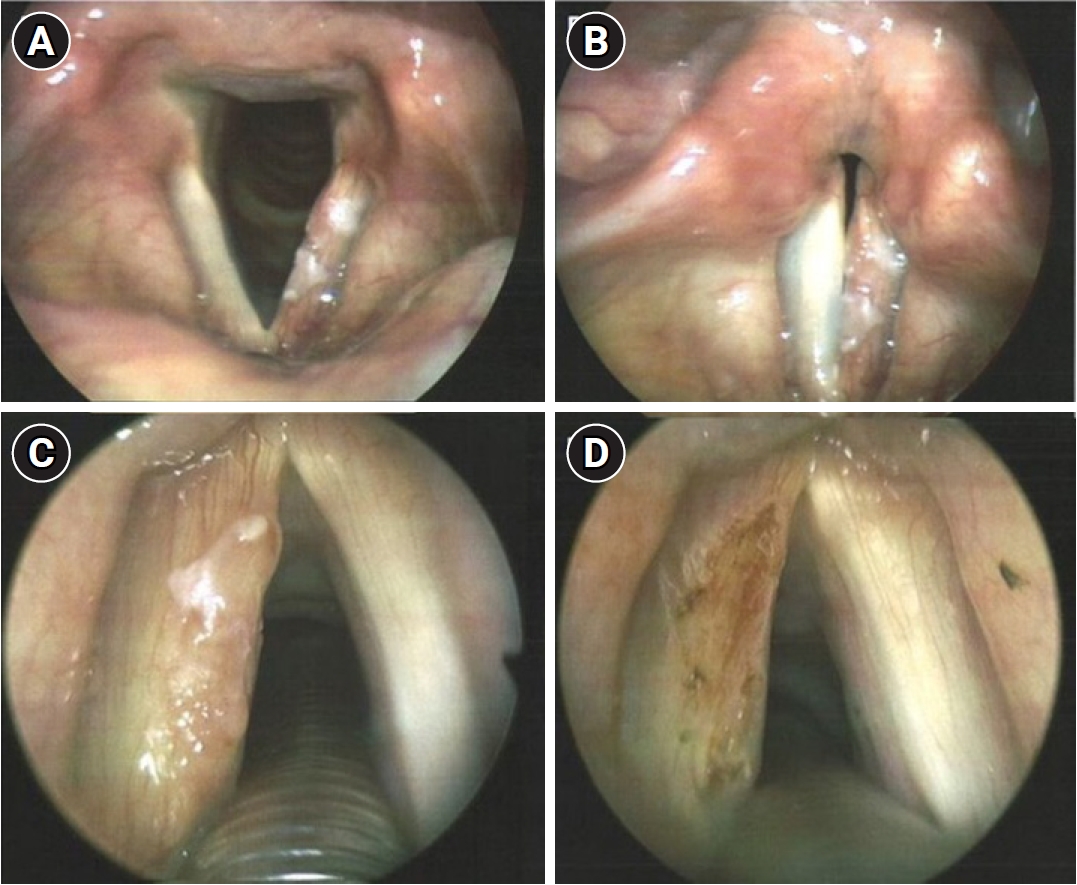
Epithelial hyperplasia on the middle and posterior part of the left vocal fold. Breathing (abduction) position and phonation (adduction) position (A, B) on stroboscopic examination. Laryngeal microscopic examination before and after excision on the left vocal fold (C, D).
Fig. 2.
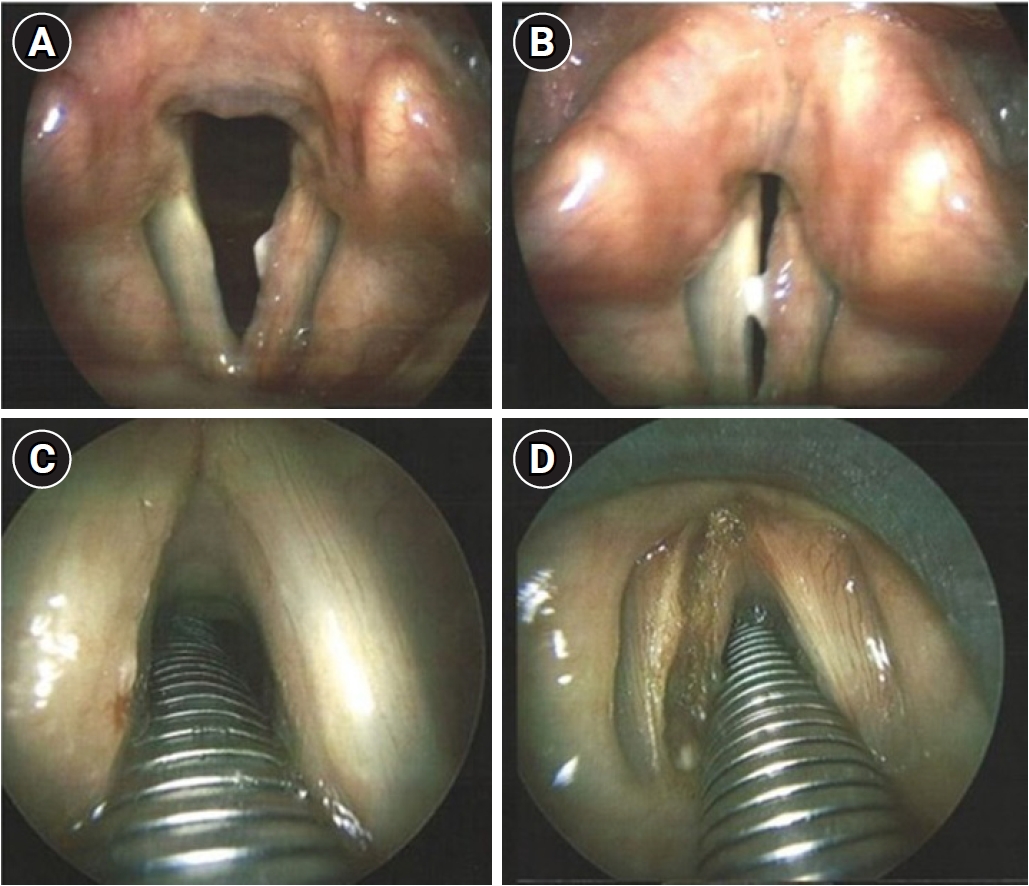
Recurrence of laryngeal leukoplakia on the left vocal fold 14 months after laser resection. Breathing (abduction) position and phonation (adduction) position (A, B) on stroboscopic examination. Laryngeal microscopic examination before and after mass excision on the right anterior and left vocal fold (C, D).
Table 1.
Career history of the patient as a cook at group-catering facilities
Table 2.
Chronological summary of clinical and occupational events
- 1. IARC Working Group on the Evaluation of Carcinogenic Risks to Humans. Household use of solid fuels and high-temperature frying. IARC Monogr Eval Carcinog Risks Hum 2010;95:1–430.PubMedPMC
- 2. Gao X, Zhang M, Zou H, Zhou Z, Yuan W, Quan C, et al. Characteristics and risk assessment of occupational exposure to ultrafine particles generated from cooking in the Chinese restaurant. Sci Rep 2021;11(1):15586.ArticlePubMedPMCPDF
- 3. Svendsen K, Jensen HN, Sivertsen I, Sjaastad AK. Exposure to cooking fumes in restaurant kitchens in Norway. Ann Occup Hyg 2002;46(4):395–400.ArticlePubMed
- 4. Gorguner M, Akgun M. Acute inhalation injury. Eurasian J Med 2010;42(1):28–35.ArticlePubMedPMC
- 5. Almashat S, Harrison R. Occupational cancer. In: LaDou J, Harrison RJ, editors. Current Diagnosis and Treatment: Occupational and Environmental Medicine. 6th ed. https://accessmedicine.mhmedical.com/content.aspx?bookid=3065§ionid=255653367. Updated 2021. Accessed June 1, 2023.
- 6. Liu X, Zheng W, Sivasankar MP. Acute acrolein exposure induces impairment of vocal fold epithelial barrier function. PLoS One 2016;11(9):e0163237.ArticlePubMedPMC
- 7. Isenberg JS, Crozier DL, Dailey SH. Institutional and comprehensive review of laryngeal leukoplakia. Ann Otol Rhinol Laryngol 2008;117(1):74–9.ArticlePubMedPDF
- 8. Blackwell KE, Calcaterra TC, Fu YS. Laryngeal dysplasia: epidemiology and treatment outcome. Ann Otol Rhinol Laryngol 1995;104(8):596–602.ArticlePubMedPDF
- 9. Jia PL, Zhang C, Yu JJ, Xu C, Tang L, Sun X. The risk of lung cancer among cooking adults: a meta-analysis of 23 observational studies. J Cancer Res Clin Oncol 2018;144(2):229–40.ArticlePubMedPMCPDF
- 10. Foppa I, Minder CE. Oral, pharyngeal and laryngeal cancer as a cause of death among Swiss cooks. Scand J Work Environ Health 1992;18(5):287–92.ArticlePubMed
- 11. Woo SH, Kim RB, Choi SH, Lee SW, Won SJ. Prevalence of laryngeal disease in South Korea: data from the Korea National Health and Nutrition Examination Survey from 2008 to 2011. Yonsei Med J 2014;55(2):499–507.ArticlePubMedPMC
- 12. Klimza H, Jackowska J, Pietruszewska W, Porebski A, Nogal P, Leduchowska A, et al. Vocal fold leukoplakia recurrence risk model. Sci Rep 2024;14(1):266.ArticlePubMedPMCPDF
- 13. Moghe A, Ghare S, Lamoreau B, Mohammad M, Barve S, McClain C, et al. Molecular mechanisms of acrolein toxicity: relevance to human disease. Toxicol Sci 2015;143(2):242–55.ArticlePubMedPMC
- 14. Faroon O, Roney N, Taylor J, Ashizawa A, Lumpkin MH, Plewak DJ. Acrolein health effects. Toxicol Ind Health 2008;24(7):447–90.ArticlePubMedPDF
- 15. National Research Council (US) Committee on Toxicology. Acrolein. In: Emergency and Continuous Exposure Limits for Selected Airborne Contaminants. Vol 1. https://www.ncbi.nlm.nih.gov/books/NBK208278/. Updated 1984. Accessed June 6, 2023.
- 16. National Institute for Occupational Safety and Health. Acrolein: NIOSH pocket guide to chemical hazards. https://www.cdc.gov/niosh/npg/npgd0011.html. Updated 2019. Accessed May 18, 2026.
- 17. Oh B, Jeong JY, Shin J, Kim B. A field study on volatile organic compounds generated during cooking in a large pot using PTR-ToF-MS. J Environ Anal Health Toxicol 2022;25(1):33–42.ArticlePDF
- 18. Zhang W, Bai Z, Shi L, Son JH, Li L, Wang L, et al. Investigating aldehyde and ketone compounds produced from indoor cooking emissions and assessing their health risk to human beings. J Environ Sci (China) 2023;127:389–98.ArticlePubMed
- 19. Lee IJ, Lee SG, Choi BH, Seo HK, Choi JH. Hazard levels of cooking fumes in Republic of Korea schools. Saf Health Work 2022;13(2):227–34.ArticlePubMedPMC
- 20. Kim M, Kim Y, Kim AR, Kwon WJ, Lim S, Kim W, et al. Cooking oil fume exposure and Lung-RADS distribution among school cafeteria workers of South Korea. Ann Occup Environ Med 2024;36:e2.ArticlePubMedPMCPDF
- 21. Chen TY, Fang YH, Chen HL, Chang CH, Huang H, Chen YS, et al. Impact of cooking oil fume exposure and fume extractor use on lung cancer risk in non-smoking Han Chinese women. Sci Rep 2020;10(1):6774.ArticlePubMedPMCPDF
- 22. Zheng W, Blot WJ, Shu XO, Gao YT, Ji BT, Ziegler RG, et al. Diet and other risk factors for laryngeal cancer in Shanghai, China. Am J Epidemiol 1992;136(2):178–91.ArticlePubMed
- 23. Lee JH, An J, Won HK, Kang Y, Kwon HS, Kim TB, et al. Prevalence and impact of comorbid laryngeal dysfunction in asthma: a systematic review and meta-analysis. J Allergy Clin Immunol 2020;145(4):1165–73.ArticlePubMed
- 24. Anderson JA. Work-associated irritable larynx syndrome. Curr Opin Allergy Clin Immunol 2015;15(2):150–5.ArticlePubMed
REFERENCES
Figure & Data
REFERENCES
Citations
Citations to this article as recorded by 
 Cite
Cite XML Download
Recurrent laryngeal leukoplakia in a cook occupationally exposed to cooking oil fumes: a case report
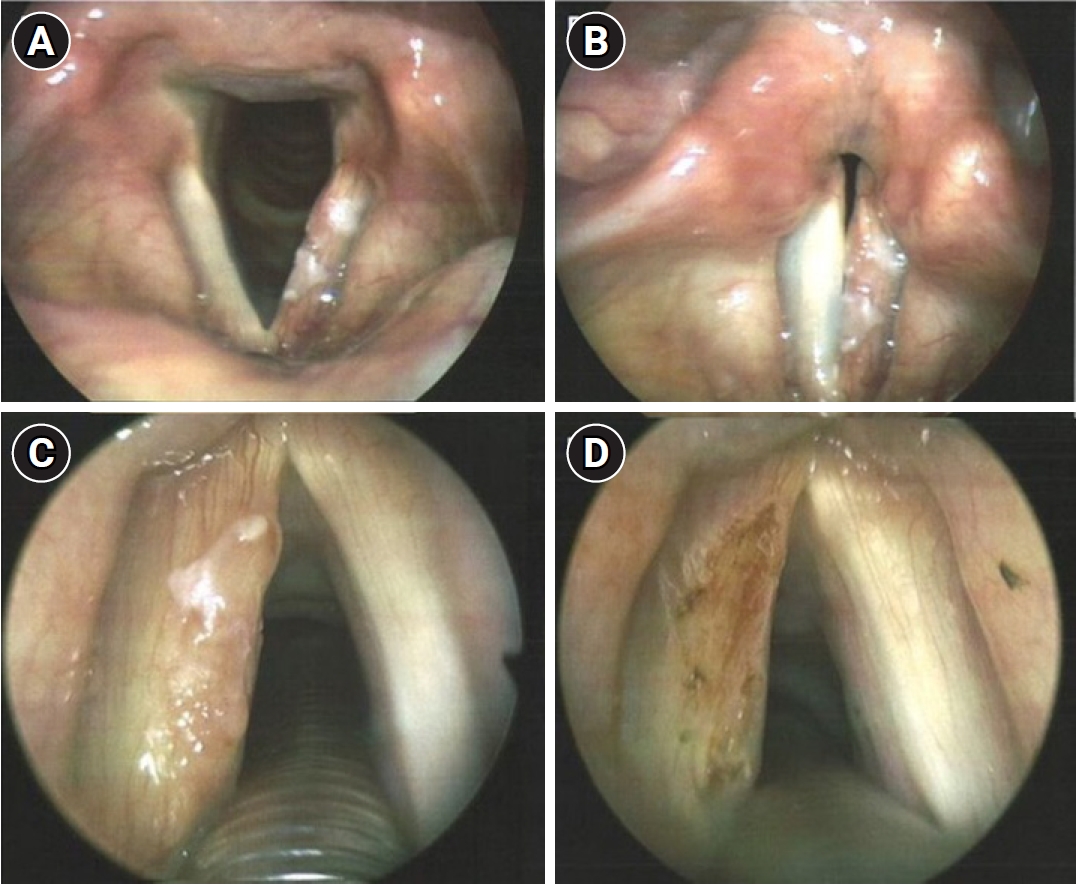
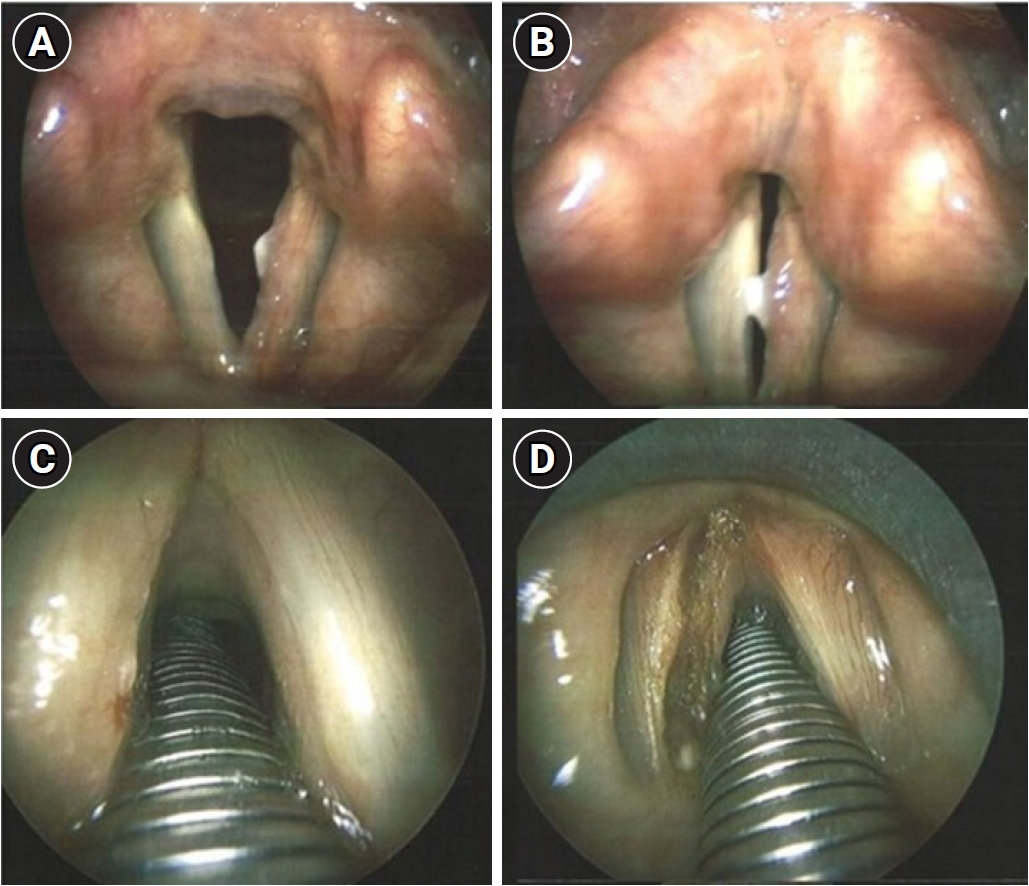
Fig. 1. Epithelial hyperplasia on the middle and posterior part of the left vocal fold. Breathing (abduction) position and phonation (adduction) position (A, B) on stroboscopic examination. Laryngeal microscopic examination before and after excision on the left vocal fold (C, D).
Fig. 2. Recurrence of laryngeal leukoplakia on the left vocal fold 14 months after laser resection. Breathing (abduction) position and phonation (adduction) position (A, B) on stroboscopic examination. Laryngeal microscopic examination before and after mass excision on the right anterior and left vocal fold (C, D).
Fig. 1.
Fig. 2.
Recurrent laryngeal leukoplakia in a cook occupationally exposed to cooking oil fumes: a case report
| Date/Period | Types of catering facilities | No. of meal servings/day | No. of kitchen staff |
|---|---|---|---|
| Sep 2000–Sep 2002 | Staff cafeteria in a general hospital | 200 | 6 |
| Oct 2002–Mar 2005 | Staff cafeteria in a department store | 600 | 5 |
| Nov 2007–Sep 2015 | Long-term care hospital | 200–250 | 5 |
| Dec 2015–Feb 2017 | Long-term care hospital | 300 | 6 |
| Feb 2017–Apr 2018 | Long-term care hospital | 150–180 | 5 |
| Date/Period | Age (years) | Event type | Description/Findings |
|---|---|---|---|
| Jul 1997–Aug 1998 | 34–35 | Employment | First job in yogurt sales business |
| Sep 2000–Jan 2020 | 37–57 | Occupation | Cook at group-catering facilities; repeated oil-intensive cooking tasks with estimated exposure to cooking oil fumes for 2–4.5 hours/day |
| Apr 2018 | 55 | Diagnostic finding | Suspicious granulation tissue lesion in the larynx during routine endoscopy |
| Jul 18, 2018 | 55 | 1st surgery | Laryngeal microsurgery and laser excision of the left vocal fold lesion; histology showed high-grade dysplasia |
| Aug–Sep 2018 | 55 | Follow-up | Two outpatient visits at 2 and 6 weeks; follow-up discontinued after the second visit |
| Sep 2019 | 56 | Recurrence | Persistent voice change; stroboscopy showed recurrent granulation tissue |
| Jan 2020 | 57 | 2nd surgery | Laryngeal microsurgery mass excision; frozen biopsy showed low- and high-grade dysplasia |
| May 2020 | 57 | Workers' compensation claim | The worker applied for workers' compensation; KCOMWEL commissioned OSHRI to conduct an epidemiological investigation |
| May 2020–Jun 2022 | 57–59 | Epidemiological investigation | An epidemiological investigation was conducted to assess work-relatedness |
| Jun 2022 | 59 | Determination of work-relatedness | The Epidemiological Investigation and Evaluation Committee of OSHRI determined that substantial scientific evidence supported work-relatedness of laryngeal leukoplakia in the worker |
Table 1. Career history of the patient as a cook at group-catering facilities
Table 2. Chronological summary of clinical and occupational events
KCOMWEL: Korea Workers' Compensation and Welfare Service; OSHRI: Occupational Safety and Health Research Institute.


