 KSOEM
KSOEM

Articles
- Page Path
- HOME > Ann Occup Environ Med > Volume 38; 2026 > Article
- Original Article Risk of sleep disturbance associated with work-related activities during free time in South Korea: a cross-sectional study with mediation analysis
-
Ohwi Kwon1
 , Hye-Eun Lee2,3, Mo-Yeol Kang1,*
 -
Annals of Occupational and Environmental Medicine 2026;38:e11.
DOI: https://doi.org/10.35371/aoem.2026.38.e11
Published online: March 20, 2026
1Department of Occupational and Environmental Medicine, Seoul St. Mary’s Hospital, College of Medicine, The Catholic University of Korea, Seoul, Korea
2Department of Social and Preventive Medicine, Hallym University College of Medicine, Chuncheon, Korea
3Institute of Social Medicine, Hallym University College of Medicine, Chuncheon, Korea
- *Corresponding author: Mo-Yeol Kang Department of Occupational and Environmental Medicine, Seoul St. Mary’s Hospital, College of Medicine, The Catholic University of Korea, 222 Banpo-daero, Seocho-gu, Seoul 06591, Korea E-mail: snaptoon@naver.com
• Received: January 14, 2026 • Revised: March 11, 2026 • Accepted: March 12, 2026
© 2026 Korean Society of Occupational & Environmental Medicine
This is an Open Access article distributed under the terms of the Creative Commons Attribution Non-Commercial License (https://creativecommons.org/licenses/by-nc/4.0/) which permits unrestricted non-commercial use, distribution, and reproduction in any medium, provided the original work is properly cited.


Abstract
-
Background This study aims to investigate the associations between work-related activities during free time, including frequency of working during free time and use of communication devices for work during free time, and sleep disturbance. It further explores the underlying mechanisms through mediation analysis.
-
Methods Data were analyzed from 21,473 participants of the seventh Korean Working Conditions Survey (KWCS, 2023). Multivariable logistic regression was employed to calculate odds ratios (ORs) and 95% confidence intervals (CIs) for sleep disturbance. Three sequential models were constructed to evaluate the effects of weekly working hours and shift work on sleep disturbance risk. Mediation analysis was conducted to identify pathways linking work-related activities during free time and sleep disturbance.
-
Results Those who worked during their free time daily showed significantly higher risk of sleep disturbance (OR: 4.17; 95% CI: 2.64–6.58). Similarly, daily use of communication devices for work during free time was associated with an increased risk (OR: 1.83; 95% CI: 1.57–2.13). These associations remained robust even after adjusting for weekly working hours and shift work. Mediation analysis revealed that "worry about work while at home" was the primary mediator for device use (13.7%; 95% CI: 0.11–0.18), while "feeling too tired for housework after work" was the strongest mediator for working during free time (26.6%; 95% CI: 0.22–0.32).
-
Conclusions The results indicate that engaging in work-related activities during free time elevates the risk of sleep disturbance, independent of long working hours or shift patterns. Mediation analysis revealed that the strongest effects were driven by the behavioral and psychological dimensions of work–family conflict. These findings suggest that sleep disturbance arises primarily from the erosion of work–life boundaries, fueled by persistent work-related rumination and the spillover of professional burdens into free time.
BACKGROUND
The development of communication technologies and the widespread adoption of mobile devices, such as smartphones, have accelerated work pace and enhanced flexibility and efficiency. At the same time, these advances have blurred the boundaries between work and private life.1 The so-called “always-on” work culture exposes employees to work-related communications, including emails, messaging applications, and phone calls, even during non-working hours such as evenings, weekends, and holidays, and represents a major factor that substantially undermines adequate rest and recovery.2
A previous study conducted among 2,402 workers in South Korea identified a positive correlation between the use of smart devices for work and increased workload and working hours.3 More than 40% of workers reported significant work-related stress associated with smart device use. Perceived stress was particularly pronounced when smart devices were used for work during weekends and holidays. Among female workers, work-related smart device use after regular working hours did not directly affect life satisfaction but was reported to directly increase work–family conflict.4
Exposure to work-related activities during free time also exerts a direct adverse effect on health. Evidence indicates an increased risk of sleep disorders among both men and women when work intrudes into non-working time.5 Beyond the act of performing work itself, continuous thinking about work-related content, referred to as emotional rumination, functions as a core mechanism that independently increases fatigue, heightens psychological burden, and reduces sleep quality through the induction of pre-sleep arousal.6
Impaired sleep quality associated with smartphone use represents more than an isolated sleep problem and instead initiates a vicious cycle that affects work performance and organizational functioning. For example, habitual smartphone use in bed increases the risk of poor sleep quality, which subsequently reduces work performance and engagement on the following day and increases interpersonal conflict.7 Furthermore, a phenomenon has been observed in which employees who frequently receive work-related contact during free time through information and communication technology (ICT) demonstrate higher levels of presenteeism. In this context, sleep deprivation has been proposed as a mediating factor, with stronger mediating effects observed as the level of exchange ideology increases, linking work-related ICT contact during free time to presenteeism through sleep deprivation.8
This issue has highlighted the global importance of the concept of the right to disconnect, which broadly refers to the right of an employee to refrain from receiving any form of employer-initiated contact, such as work-related emails, messages, or phone calls, outside working hours.9 This concept has been framed as a fundamental social right intended to protect private life and ensure an adequate right to rest. Several developed countries, including France (2017), Italy (2017), Portugal (2021), Belgium (2022), and Australia (2024), have incorporated the right to disconnect into legislation, thereby establishing institutional safeguards to protect the right to rest.10,11
Against this backdrop, an empirical analysis of the impact of work-related activities during free time on health outcomes, particularly sleep disorders, is highly timely. South Korea reports longer annual working hours and fewer holidays than other Organization for Economic Co-operation and Development countries,12 and evidence from such analyses can inform policy efforts aimed at guaranteeing the right to disconnect and reducing actual working hours. Previous studies have examined the direct association between the use of smart devices for work purposes during non-working hours and sleep disorders,13,14 but most have focused on identifying simple correlations without exploring underlying mechanisms. Building upon these findings, this study further aims to empirically assess the associations of working during free time and the use of communication devices for work during free time as an independent variables, and to identify specific mediating pathways through which such ICT utilization to sleep disorders.
METHODS
Data were obtained from the seventh Korean Working Conditions Survey (KWCS), conducted in 2023. The KWCS is a cross-sectional survey designed to collect foundational data for industrial accident prevention policies by assessing employment conditions and work environments relevant to occupational safety and health among approximately 50,000 employed individuals aged 15 years or older in Korea. The survey is administered through one-on-one, in-person household interviews conducted by trained interviewers. A total of 50,195 workers who participated in the seventh KWCS were initially screened for eligibility. Self-employed workers and unpaid family workers were excluded. To eliminate potential effects of multiple employment on sleep disturbance, inclusion was limited to individuals with a single job or business (n = 300). Individuals working fewer than 30 hours per week were excluded to align with the Organization for Economic Co-operation and Development’s standard for part-time work, thereby minimizing potential bias from irregular or short-term employment patterns (n = 5,758). Total exclusions amounted to 5,951 individuals, accounting for 107 overlapping cases. Across all variables, participants with missing data or responses categorized as “other,” “don’t know/no answer,” “reject,” “no opinion,” or “refusal” were also excluded. After applying these criteria, a final sample of 21,473 participants was included in the analysis. This process is presented in Fig. 1.
Use of communication devices for work during free time
Responses to the question, “In the last month, in your free time, how often have you used communication tools for work? (e.g., emails, phone or video conferencing, text messaging, social media, or other applications)?” were categorized into four groups: “daily,” “≥2 times per month,” “<2 times per month,” and “never.”
Responses of “daily” were classified as “daily.” Responses of “several times a week” and “several times a month” were grouped as “≥2 times per month.” Responses of “less often” were grouped as “<2 times per month.” Responses of “never” were classified as “never”.
Frequency of working during free time
Responses to the question, “Over the last 12 months, how often have you worked in your free time to meet work demands? (If you have worked for less than one year, please respond based on the period since you started your main job. Free time refers to time outside of economic activity that includes rest and various hobbies.)” were categorized into four groups: “daily,” “≥2 times per month,” “<2 times per month,” and “never.”
Responses of “daily” were classified as “daily.” Responses of “several times a week” and “several times a month” were grouped as “≥2 times per month.” Responses of “less often” were grouped as “<2 times per month.” Responses of “never” were classified as “never.”
Sleep disturbance
Sleep disturbance was assessed using the Minimal Insomnia Symptom Scale (MISS),15 which evaluates three sleep-related symptoms: difficulties falling asleep, night awakenings, and not being rested by sleep. Each item was scored on a scale from 0 to 4, corresponding to response frequencies of “never” (0 points), “less often” (1 point), “several times a month” (2 points), “several times a week” (3 points), and “daily” (4 points). Total scores were calculated by summing the three items, with scores of 6 or higher indicating sleep disturbance and scores of 5 or lower indicating no sleep disturbance.
Mediators
The following variables were considered mediators: anxiety related to job, stress at work, worry about work while at home, feeling too tired for housework after work, work interference with family time, and depression assessed using the World Health Organization-Five Well-Being Index (WHO-5). Anxiety related to job was dichotomized as yes or no. The WHO-5 comprises five items, and a raw score below 13 has been proposed as a cutoff indicating poor mental well-being and the need for further assessment for a potential mental health condition.16 The remaining mediator variables were categorized into five response options: “always,” “most of the time,” “sometimes,” “rarely,” and “never.”
Covariates
Demographic variables included sex, age (<30, 30–39, 40–49, 50–59, and ≥60 years), and education level (middle school or lower, high school graduate, and college or higher). Occupational variables included occupation, type of employment, weekly working hours, number of employees, flexibility of working hours, work schedule, shift work, and choice of work location.
Occupations were classified into nine categories according to the Korean Standard Classification of Occupations. Type of employment was grouped as employee, temporary employee, or day laborer. Weekly working hours were categorized as ≤40, 41–52, and >52 hours. The number of employees was categorized as <5, 5–49, 50–299, and ≥300. Flexibility of working hours and shift work were each classified as yes or no. Work schedule was grouped as full-time or part-time work. Choice of work location, defined as the ability to select a place of work, was categorized into four levels: to a large extent, to some extent, not much, and not at all.
All statistical analyses were performed using SAS software version 9.4 (SAS Institute, Cary, NC, USA), and p-values < 0.05 were considered statistically significant. The chi-square test was used to examine the distribution of sleep disturbance according to general and occupational characteristics. Multivariable logistic regression analysis was conducted to estimate odds ratios (ORs) and 95% confidence intervals (CIs) for associations between use of communication devices for work during free time or frequency of working during free time and sleep disturbance. ORs for sleep disturbance were first estimated after adjustment for covariates. Three sequential models were constructed to evaluate the effects of weekly working hours and shift work on sleep disturbance risk. Model 1 was adjusted for education level, sex, age, employment type, occupation, work schedule, flexibility of working hours, number of employees, and choice of work location. Model 2 included all model 1 variables with additional adjustment for weekly working hours. Model 3 included all model 2 variables with further adjustment for shift work. Supplementary age-stratified analyses were also conducted to account for potential age-related differences in associations between work-related activities during free time and sleep disturbance.
Mediation analysis was performed to clarify pathways linking use of communication devices for work during free time or frequency of working during free time with sleep disturbance. Mediation analyses were conducted using R statistical software version 4.5.1 (R Foundation for Statistical Computing, Vienna, Austria) within the RStudio environment version 2025.09.0-387 (RStudio, Boston, MA, USA). Data management and analysis used the readxl, writexl, dplyr, and mediation packages. Statistical significance of indirect effects, defined as effects of independent variables on sleep disturbance through mediators, was evaluated using bootstrapping with 1,000 replications.
This study used open data downloaded from websites based on the seventh KWCS results provided by the Korean Occupational Safety and Health Agency. This original study was approved with an exemption of ethical deliberation by the Institutional Review Board of Seoul St. Mary’s Hospital, College of Medicine, The Catholic University of Korea (exception number: KC23ZISI0622).
RESULTS
Demographic and occupational characteristics of study participants are summarized in Table 1. Among 21,473 participants, 1,752 individuals (8.16%) reported sleep disturbance. The prevalence of sleep disturbance increased significantly with age (p < 0.01), and a higher rate was observed among women compared with men. In addition, lower education levels were significantly associated with a greater prevalence of sleep disturbance (p < 0.01).
Several occupational factors showed strong and statistically significant associations with sleep disturbance. Indicators of poor work–life balance, including frequent working during free time and daily use of communication devices for work during free time, were significantly associated with sleep disturbance (p < 0.01 for both). Regarding working conditions, longer weekly working hours (≥52 hours per week), lack of flexibility of working hours, and limited or no ability to choose work location were all associated with a higher prevalence of sleep disturbance (p < 0.01).
Table 2 presents adjusted ORs (ORs and 95% CIs) for associations of use of communication devices for work during free time and frequency of working during free time with sleep disturbance. Associations across all models were highly statistically significant (p < 0.01). An incremental modeling strategy was applied using three models (model 1, model 2, and model 3) to rigorously evaluate these associations. Weekly working hours and shift work, which represent major determinants of sleep disorders, were additionally adjusted for in model 2 and model 3, respectively, to isolate independent effects. For frequency of working during free time, adjusted ORs for sleep disturbance increased markedly with increasing frequency. Individuals who worked during free time on a daily basis showed adjusted ORs exceeding 4.0 (4.05–4.17), indicating more than a fourfold higher risk of sleep disturbance compared with the reference group that never worked during free time. OR estimates remained virtually unchanged across model 1, model 2, and model 3, suggesting minimal influence of additional covariate adjustment on this association. For use of communication devices for work during free time, ORs did not demonstrate a monotonic increase across frequency categories. Instead, the highest OR was observed in the “≥2 times per month” category.
The mediation analysis shown in Fig. 2 indicates that frequency of working during free time contributes significantly to sleep disturbance through multiple mediators, with the strongest pathways related to fatigue and familial conflict. The three most influential mediators were feeling too tired for housework after work (26.6%; 95% CI: 0.22–0.32), work interference with family time (24.3%; 95% CI: 0.20–0.29), and worry about work while at home (22.5%; 95% CI: 0.19–0.28). Psychological factors, including anxiety related to job (8.54%), stress at work (3.92%), and depression (0.88%), showed substantially smaller mediation effects.
The mediation analysis presented in Fig. 3 demonstrates that use of communication devices for work during free time also contributes significantly to sleep disturbance. A similar pattern was observed, with mediators related to fatigue and interference with home life accounting for the largest effects. The three strongest positive mediation effects were worry about work while at home (13.7%; 95% CI: 0.11–0.18), work interference with family time (13.0%; 95% CI: 0.10–0.17), and feeling too tired for housework after work (12.2%; 95% CI: 0.09–0.16). Smaller positive mediation effects were observed for anxiety related to job (7.67%) and stress at work (4.56%). Notably, depression showed a small negative mediation effect (−1.75%), although the magnitude of this effect was limited.
DISCUSSION
This study analyzed associations between work-related activities during free time and sleep disturbance, with consideration of multiple mediating factors. The main findings indicate that both frequency of working during free time and use of communication devices for work during free time are strongly associated with sleep disturbance. These results align with existing literature demonstrating that blurring of boundaries between work and personal life negatively affects worker well-being.17 This study further provides empirical support for prior evidence linking work-related use of smart devices with adverse health outcomes.18
Long working hours19,20 and shift work21,22 represent well-established risk factors for sleep disorders; however, associations remained significant after adjustment for these factors (Table 2). This finding suggests that work-related activities during free time constitute an independent risk factor for sleep disturbance. Additional analyses of specific sleep disturbance components, including difficulties falling asleep, night awakenings, and not being rested by sleep, are presented in Supplementary Tables 1 and 2. Working during free time showed particularly strong associations with not being rested by sleep, whereas use of communication devices for work during free time was more strongly associated with difficulties falling asleep. These results indicate that different types of work-related activities during free time may influence heterogeneous effects on sleep disturbance.
Supplementary Table 3 presents age-stratified analyses showing higher ORs among younger age groups, particularly individuals in their thirties, for both frequency of working during free time and use of communication devices for work during free time. Previous research indicates that younger generations, particularly Millennials, tend to prefer employers that allow greater fluidity between work and leisure.23 Millennials also place a higher value on leisure than other generations and consider extended vacations of two weeks or more to be important.24 Additional studies suggest that younger adults are especially vulnerable to anxiety related to work pressure and socioeconomic instability.25 Considering life-cycle stressors such as childcare and domestic burdens, which typically peak during the 30s, a complex interplay of these factors likely contributes to the higher risk of sleep disturbance observed among younger adults who engage in work-related activities during free time.
The mediation analysis demonstrated that behavioral and psychological manifestations of work–family conflict—specifically worry about work while at home, feeling too tired for housework after work, and work interference with family time—accounted for the strongest mediating effects. Job stress-related factors, including stress at work and anxiety related to job, showed the next largest mediating contributions. These findings indicate that work-related activities during free time influence sleep disturbance primarily through blurring of work–family boundaries rather than through direct job stress, with emotional rumination and spillover of work burden into the domestic domain serving as key mechanisms. Previous research supports this interpretation, demonstrating that rumination and worry predict higher pre-sleep arousal, which in turn predicts poorer sleep quality.26 In addition, positive associations between psychological detachment and mental health indicators, including improved sleep, have been reported.27 Notably, mediation effects were stronger for active work engagement during free time than for communication device use, suggesting that purpose and intensity of activity exert greater influence than mere exposure to ICT.
A consistently minimal mediating effect was observed for depression. This pattern suggests that sleep disturbance is more strongly influenced by acute factors, such as rumination about daily work demands and work-related stress, rather than by chronic conditions such as mood disorders. Among employed adults, major depression represents a leading cause of work absence (absenteeism), reduced work performance (presenteeism), and short- and long-term work disability.28 Symptom relief and vocational interventions can improve functioning among individuals with depression and may mitigate occupational impairment,29 potentially contributing to the low mediating effects observed.
The findings highlight the need for multifaceted interventions at individual, organizational, and societal levels. At the organizational level, workplace cultures that normalize work-related instructions or contact outside regular working hours require urgent reform. Recent reviews emphasize the pivotal role of organizational culture in shaping experiences of work–life balance.30 Greater benefits may arise when structural measures, such as right-to-disconnect policies, are combined with active interventions that promote mental health. Evidence from meta-analyses demonstrates that workplace mental health interventions can reduce stress and job pressure, enhance self-esteem, facilitate return to work, and improve work–life balance.31 In addition, age-sensitive approaches warrant consideration, as perceptions of work–life balance culture and organizational commitment vary across generations, along with determinants of organizational commitment.32 Sociocultural factors, including hierarchical relationships shaped by age and workplace rank in Korean society, further highlight the importance of context-specific intervention strategies.
This study has several limitations. First, the assessments for anxiety, stress, and sleep disturbance (MISS) relied on self-reported questionnaires, which introduce the potential for subjectivity and recall bias. In particular, the MISS lacks the diagnostic precision offered by objective clinical assessments. Furthermore, depression was assessed using the WHO-5; the very small mediating effect observed in the mediation analysis suggests that this instrument may not have fully captured the impact of depressive symptoms. Second, for use of communication devices for work during free time, the highest OR was observed in the “≥2 times per month” category rather than in the “daily” category. This suggests that while routine daily communication for non-urgent matters may be less stressful due to its predictability, infrequent but unpredictable and urgent contacts could impose a greater psychological burden. However, this interpretation remains speculative as the seventh KWCS lacked detailed information on specific working characteristics. Third, the cross-sectional design involved measurement of all variables at a single time point, which limits the ability to establish temporal precedence. Longitudinal studies or experimental research designs are therefore required to confirm whether observed associations reflect causal relationships.
CONCLUSIONS
This study examined associations between work-related activities during free time, including frequency of working during free time and use of communication devices for work during free time, and sleep disturbance. The results indicate that both activities are associated with an increased risk of sleep disturbance. Mediation analysis suggests that these effects operate primarily through blurring of work–family boundaries, driven by emotional rumination and spillover of work burden into non-working time. Further research is needed to examine working characteristics such as actual working hours and job intensity in greater detail to establish causal relationships. In addition, intervention studies are warranted to assess whether organizational measures, including right-to-disconnect policies, produce measurable improvements in sleep health and mental well-being.
Abbreviations
CI
confidene interval
ICT
information and communication technology
KWCS
Korean Working Conditions Survey
MISS
Minimal Insomnia Symptom Scale
OECD
Organisation for Economic Co-operation and Development
OR
odds ratio
WHO-5
World Health Organization-Five Well-Being Index
-
Competing interests
Mo-Yeol Kang, contributing editor of the Annals of Occupational and Environmental Medicine, was not involved in the editorial evaluation or decision to publish this article. All remaining authors have declared no conflicts of interest.
-
Author contributions
Conceptualization: Kang MY. Data curation: Kwon O. Formal analysis: Kwon O. Validation: Kang MY. Visualization: Kwon O. Writing - original draft: Kwon O. Writing - review & editing: Lee HE, Kang MY.
-
Acknowledgments
The authors want to express appreciation to the Korean Occupational Safety and Health Agency, because of its offering the raw data of the Korean Working Conditions Survey.
NOTES
SUPPLEMENTARY MATERIAL
Supplementary Table 1.
OR of detailed items of sleep disturbance according to the frequency of working during free time.
Supplementary Table 2.
OR of detailed items of sleep disturbance according to the use communications devices for work during free time.
Supplementary Table 3.
OR of sleep disturbance according to work-related activities during free time.
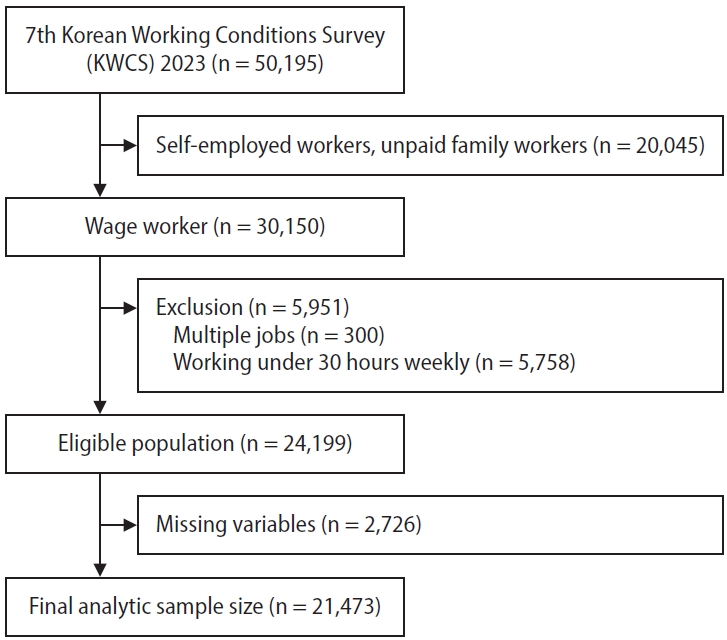
Fig. 2.
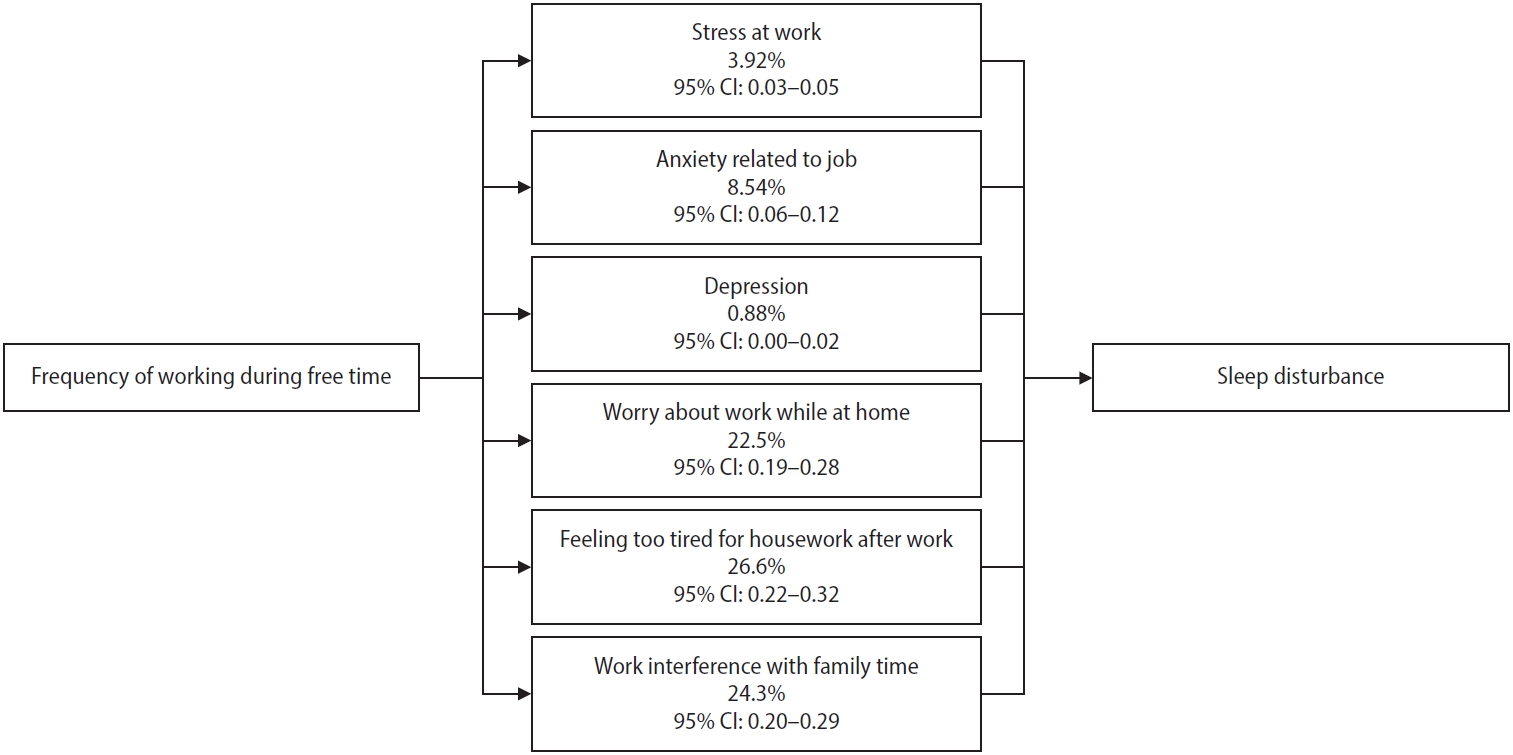
Conceptual diagram of mediators in the relationship between frequency of working during free time and sleep disturbance. CI: confidence interval.
Fig. 3.
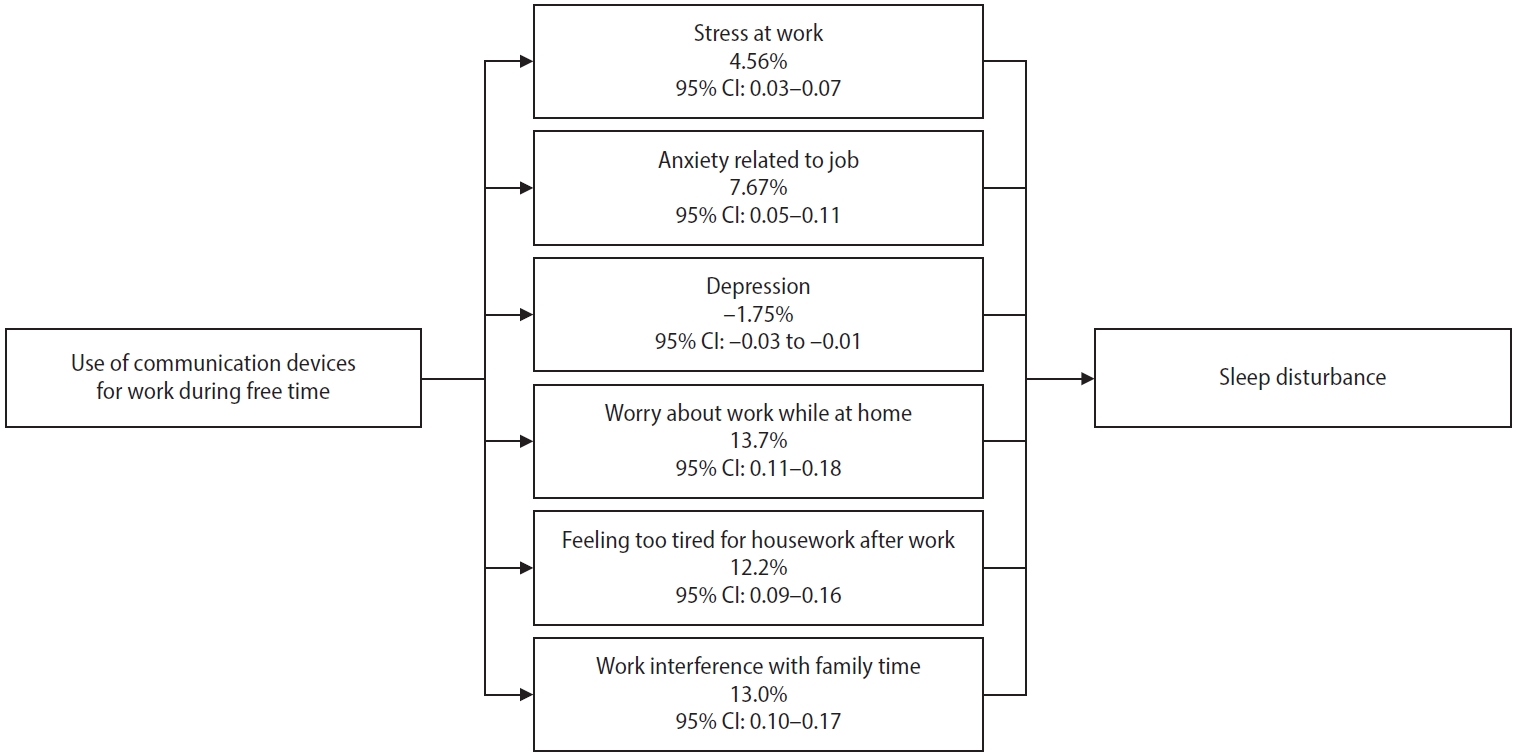
Conceptual diagram of mediators in the relationship between use of communication devices for work during free time and sleep disturbance. CI: confidence interval.
Table 1.
Characteristics of participants and prevalence of sleep disturbance
Table 2.
OR of sleep disturbance according to work-related activities during free time
| Model 1 Adjusted ORa (95% CI) | Model 2 Adjusted ORb (95% CI) | Model 3 Adjusted ORc (95% CI) | |
|---|---|---|---|
| Frequency of working during free time | |||
| Never | 1.00 (reference) | 1.00 (reference) | 1.00 (reference) |
| <2 times per month | 1.52 (1.36–1.70) | 1.52 (1.36–1.70) | 1.52 (1.36–1.70) |
| ≥2 times per month | 2.53 (2.17–2.95) | 2.51 (2.15–2.93) | 2.51 (2.15–2.94) |
| Daily | 4.17 (2.64–6.58) | 4.05 (2.56–6.41) | 4.06 (2.57–6.42) |
| Use of communication devices for work during free time | |||
| Never | 1.00 (reference) | 1.00 (reference) | 1.00 (reference) |
| <2 times per month | 1.33 (1.17–1.50) | 1.32 (1.17–1.50) | 1.32 (1.17–1.50) |
| ≥2 times per month | 1.98 (1.72–2.28) | 1.96 (1.70–2.26) | 1.96 (1.70–2.26) |
| Daily | 1.83 (1.57–2.13) | 1.83 (1.57–2.14) | 1.83 (1.57–2.14) |
p-value for all results <0.01.
OR: odds ratio; CI: confidence interval.
aModel 1: Adjusted for education level, sex, age, type of employment, occupation, work schedule, flexibility of working hours, number of employees, right to choose work location;
bModel 2: Adjusted for Model 1 covariates plus weekly working hours;
cModel 3: Adjusted for Model 2 covariates plus shift work.
- 1. Derks D, Bakker AB, Peters P, van Wingerden P. Work-related smartphone use, work-family conflict and family role performance: the role of segmentation preference. Hum Relat 2016;69(5):1045–68.ArticlePDF
- 2. Blackburn N, Rayner H. Type and the Always-on Culture: A Research Study from The Myers-Briggs Company. Sunnyvale, CA: The Myers-Briggs Company; 2019.
- 3. Lee KH. Use of smart devices on work: status and impact. Mon Lab Rev 2016;(131):5–19.
- 4. Park J. The multi-path mediated effect of work-related mobile use during nonwork time and work-family conflict on the relationship between job demands and life satisfaction. Q J Labor Policy 2017;17(4):55–82.
- 5. Lim J, Lee H, Park JB, Lee KJ, Jeong I, Jung J. Combined effect of work from home and work during nonwork time on sleep disturbance. Ann Occup Environ Med 2023;35:e28.ArticlePubMedPMCPDF
- 6. Querstret D, Cropley M. Exploring the relationship between work-related rumination, sleep quality, and work-related fatigue. J Occup Health Psychol 2012;17(3):341–53.ArticlePubMed
- 7. Ellahi A, Javed Y, Begum S, Mushtaq R, Rehman M, Rehman HM. Bedtime smart phone usage and its effects on work-related behaviour at workplace. Front Psychol 2021;12:698413.ArticlePubMedPMC
- 8. Choi WS, Kang SW, Choi SB. The dark side of mobile work during non-work hours: moderated mediation model of presenteeism through conservation of resources lens. Front Public Health 2024;12:1186327.ArticlePubMedPMC
- 9. Lee SG, Lee J. The use of smart devices at work, issues and improvement plans on working hours: mainly on the KakaoTalk prohibition act after work. J Labor Law 2016;38:145–80.
- 10. Yang S. A right to disconnect outside of working hours in France: compared with the legislation bills in Korea. Labor Law Rev 2019;(46):139–81.Article
- 11. Avogaro M. Right to disconnect: French and Italian proposals for a global issue. Law J Soc Lab Rel 2018;4(3):110–29.ArticlePDF
- 12. Kim I, Min J. Working hours and the regulations in Korea. Ann Occup Environ Med 2023;35:e18.ArticlePubMedPMCPDF
- 13. Jang YS, Lee JH, Lee NR, Kim DW, Lee JH, Lee KJ. Association between receiving work communications outside of work hours via telecommunication devices and work-related headaches and eyestrain: a cross-sectional analysis of the 6th Korean Working Conditions Survey. Ann Occup Environ Med 2023;35:e50.ArticlePubMedPMCPDF
- 14. Shin Y, Lee S, Lee W. Cross-sectional analysis of the association between information and communication technology and mental health among Korean workers. PLoS One 2024;19(11):e0310248.ArticlePubMedPMC
- 15. Broman JE, Smedje H, Mallon L, Hetta J. The Minimal Insomnia Symptom Scale (MISS): a brief measure of sleeping difficulties. Ups J Med Sci 2008;113(2):131–42.PubMed
- 16. Topp CW, Ostergaard SD, Sondergaard S, Bech P. The WHO-5 Well-Being Index: a systematic review of the literature. Psychother Psychosom 2015;84(3):167–76.ArticlePubMedPDF
- 17. Derks D, Bakker AB. Smartphone use, work-home interference, and burnout: a diary study on the role of recovery. Appl Psychol 2014;63(3):411–40.Article
- 18. Arlinghaus A, Nachreiner F. Health effects of supplemental work from home in the European Union. Chronobiol Int 2014;31(10):1100–7.ArticlePubMed
- 19. Virtanen M, Ferrie JE, Gimeno D, Vahtera J, Elovainio M, Singh-Manoux A, et al. Long working hours and sleep disturbances: the Whitehall II prospective cohort study. Sleep 2009;32(6):737–45.ArticlePubMedPMC
- 20. Ryu H, Ju S, Lee HE, Cho SS. Commuting time, working time, and their link to insomnia symptoms among Korean employees: a cross-sectional study. Sleep Health 2024;10(4):434–40.ArticlePubMed
- 21. Adane A, Getnet M, Belete M, Yeshaw Y, Dagnew B. Shift-work sleep disorder among health care workers at public hospitals, the case of Sidama national regional state, Ethiopia: a multicenter cross-sectional study. PLoS One 2022;17(7):e0270480.ArticlePubMedPMC
- 22. Kecklund G, Axelsson J. Health consequences of shift work and insufficient sleep. BMJ 2016;355:i5210.ArticlePubMed
- 23. Ng ES, Schweitzer L, Lyons ST. New generation, great expectations: a field study of the millennial generation. J Bus Psychol 2010;25(2):281–92.ArticlePDF
- 24. Twenge JM, Campbell SM, Hoffman BJ, Lance CE. Generational differences in work values: leisure and extrinsic values increasing, social and intrinsic values decreasing. J Manage 2010;36(5):1117–42.ArticlePDF
- 25. Shin H, Kim S. Factors influencing anxiety in MZ generation workers: occupational stress, social problem solving, work as meaning, and work-life balance. J Korean Acad Psychiatr Ment Health Nurs 2024;33(3):262–72.ArticlePDF
- 26. Yeh ZT, Wung SK, Lin CM. Pre-sleep arousal as a mediator of relationships among worry, rumination, and sleep quality. Int J Cogn Ther 2015;8(1):21–34.Article
- 27. Wendsche J, Lohmann-Haislah A. A meta-analysis on antecedents and outcomes of detachment from work. Front Psychol 2016;7:2072.ArticlePubMedPMC
- 28. Bond GR, Lerner D, Drake RE, Reidy C, Choi J. Work-Focused Interventions for Depression: Final Report. Washington, DC: U.S. Department of Health and Human Services; 2019.
- 29. Lerner D, Adler DA, Rogers WH, Chang H, Lapitsky L, McLaughlin T, et al. Work performance of employees with depression: the impact of work stressors. Am J Health Promot 2010;24(3):205–13.ArticlePubMedPMCPDF
- 30. Umesh U, Brindha S, Sait SA, Sharma MS, Kumar KS. The role of organizational culture in promoting work-life balance: a literature review. J Harbin Eng Univ 2023;44(8):1301–9.
- 31. Najafabadi ZA, Vaezi A, Tavakolifard N, Amini Z. The effectiveness of implemented interventions at the workplace to promote the mental health of working women: a systematic review. J Educ Health Promot 2024;13:496.ArticlePubMedPMC
- 32. Joo E, Won SY. Organizational support for work-life balance and employee commitment: an exploratory study on generational differences. Korean J Local Gov Stud 2025;29(1):23–49.Article
REFERENCES
Figure & Data
REFERENCES
Citations
Citations to this article as recorded by 
- After-hours work-related technology use, work-to-family interference, and exhaustion among Korean wage workers: gender patterns in associations and covariate-standardized levels
Hwanjin Park, Kounseok Lee
Frontiers in Public Health.2026;[Epub] CrossRef
 Cite
Cite XML Download
Risk of sleep disturbance associated with work-related activities during free time in South Korea: a cross-sectional study with mediation analysis
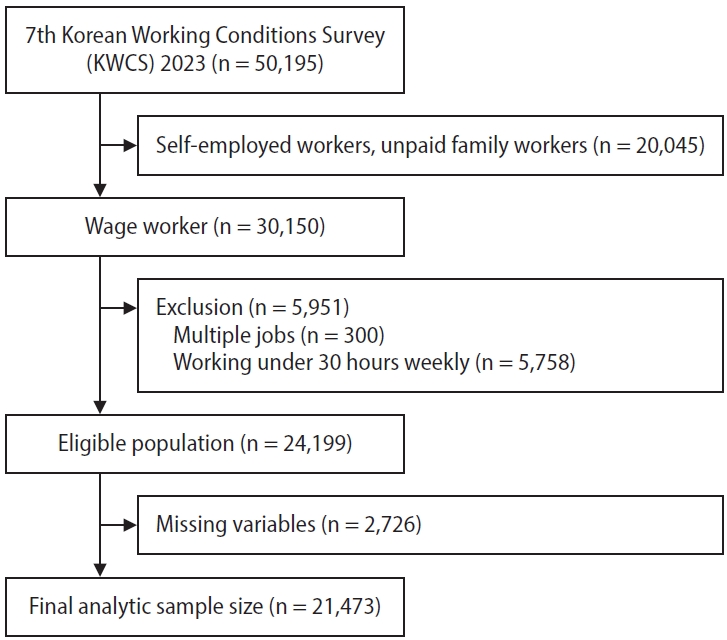
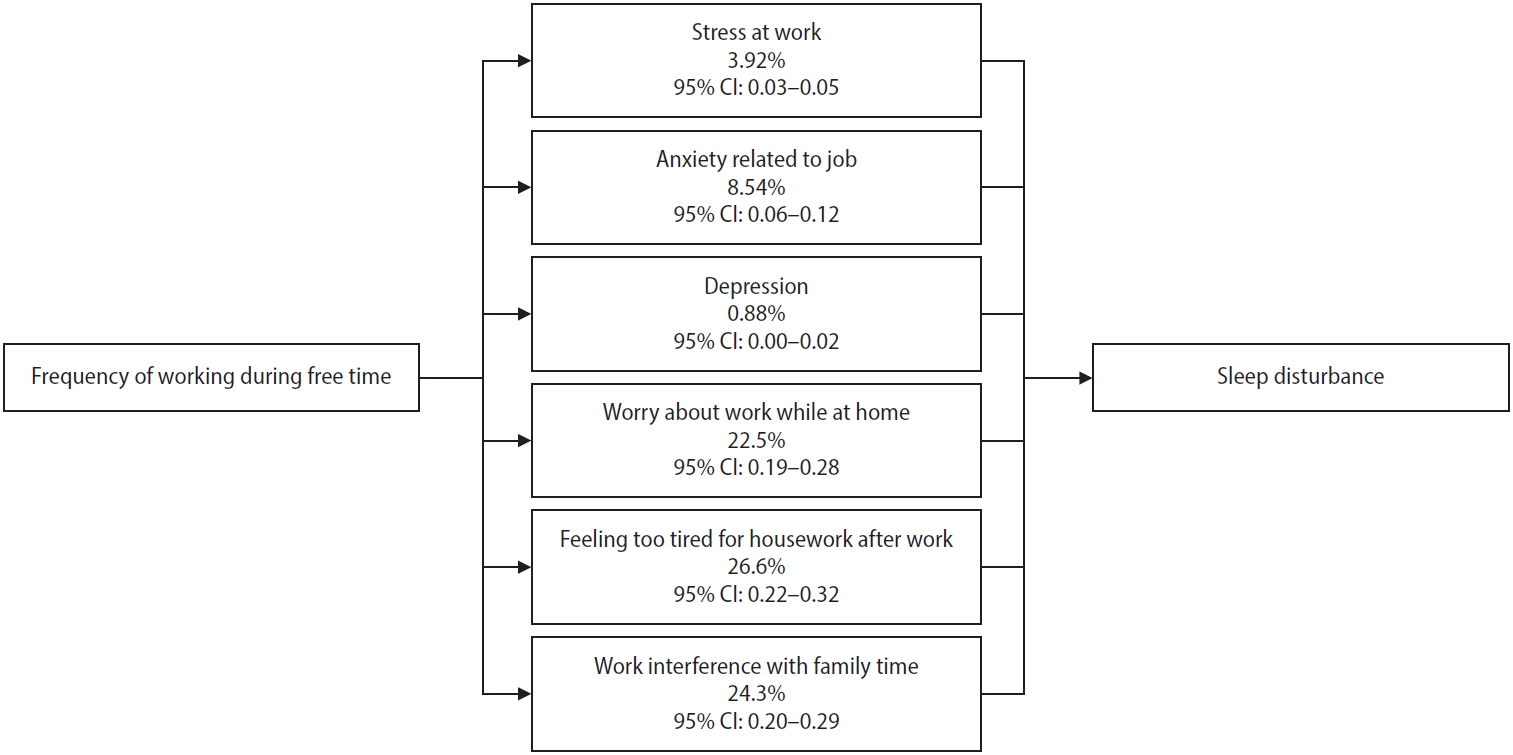
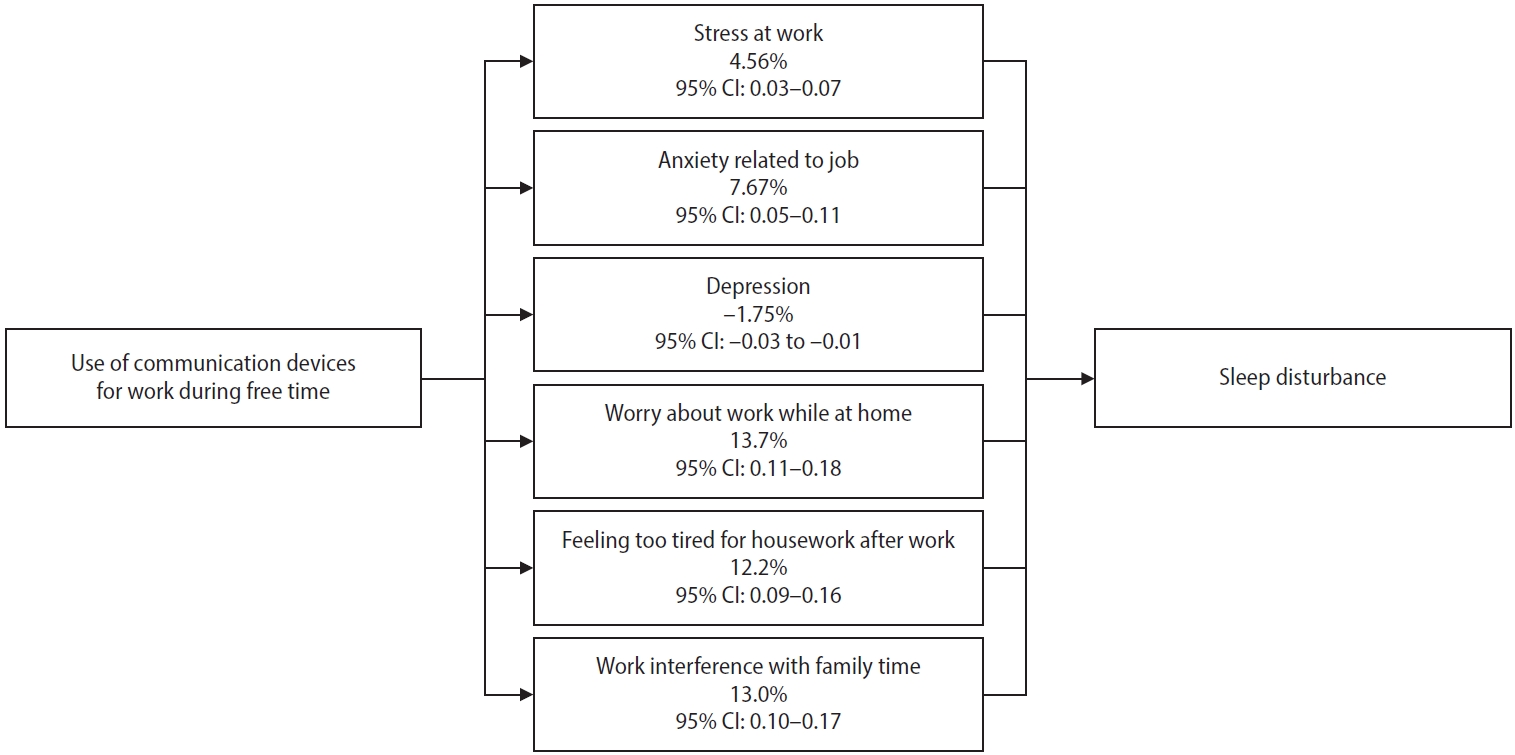
Fig. 1. Flowchart of study participants.
Fig. 2. Conceptual diagram of mediators in the relationship between frequency of working during free time and sleep disturbance. CI: confidence interval.
Fig. 3. Conceptual diagram of mediators in the relationship between use of communication devices for work during free time and sleep disturbance. CI: confidence interval.
Fig. 1.
Fig. 2.
Fig. 3.
Risk of sleep disturbance associated with work-related activities during free time in South Korea: a cross-sectional study with mediation analysis
| No sleep disturbance | Sleep disturbance | p-value | |
|---|---|---|---|
| Total | 19,721 (91.8) | 1,752 (8.2) | |
| Sex | 0.009 | ||
| Men | 9,655 (49.0) | 801 (45.7) | |
| Women | 10,066 (51.0) | 951 (54.3) | |
| Age (years) | <0.001 | ||
| <30 | 2,122 (10.8) | 95 (5.4) | |
| 30–39 | 4,751 (24.1) | 348 (19.9) | |
| 40–49 | 4,593 (23.3) | 363 (20.7) | |
| 50–59 | 5,244 (26.6) | 535 (30.5) | |
| ≥60 | 3,011 (15.2) | 411 (23.5) | |
| Education level | <0.001 | ||
| Middle school or lower | 803 (4.0) | 128 (7.3) | |
| High school | 6,153 (31.2) | 648 (37.0) | |
| College or higher | 12,765 (64.8) | 976 (55.7) | |
| Type of employment | 0.001 | ||
| Employee | 17,483 (88.7) | 1,536 (87.7) | |
| Temporary employee | 1,841 (9.3) | 157 (9.0) | |
| Day laborer | 397 (2.0) | 59 (3.3) | |
| Occupation | <0.001 | ||
| Managers | 119 (0.6) | 9 (0.5) | |
| Professionals and related workers | 4,024 (20.4) | 290 (16.6) | |
| Clerks | 5,943 (30.1) | 472 (26.9) | |
| Service workers | 2,177 (11.0) | 232 (13.2) | |
| Sales workers | 2,353 (11.9) | 187 (10.7) | |
| Skilled agricultural forestry and fishery workers | 58 (0.3) | 11 (0.6) | |
| Craft and related trades workers | 1,408 (7.1) | 130 (7.4) | |
| Equipment, machine operating and Assembling workers | 1,663 (8.4) | 187 (10.7) | |
| Elementary workers | 1,923 (9.8) | 231 (13.2) | |
| Armed forces | 53 (0.4) | 3 (0.2) | |
| Weekly working hours | <0.001 | ||
| <40 | 13,757 (69.8) | 1,172 (66.9) | |
| 40–52 | 5,110 (25.9) | 465 (26.5) | |
| ≥52 | 854 (4.3) | 115 (6.6) | |
| Work schedule | 0.169 | ||
| Full-time | 18,394 (93.3) | 1,619 (92.4) | |
| Part-time work | 1,327 (6.7) | 133 (7.6) | |
| Flexibility of working hours | <0.001 | ||
| No | 16,281 (82.7) | 1,361 (77.7) | |
| Yes | 3,440 (17.3) | 391 (22.3) | |
| Shift work | 0.127 | ||
| No | 18,285 (92.7) | 1,607 (91.7) | |
| Yes | 1,436 (7.3) | 145 (8.3) | |
| No. of employees | 0.039 | ||
| <5 | 4,390 (22.3) | 347 (19.8) | |
| 5–49 | 11,048 (56.0) | 1,030 (58.8) | |
| 50–299 | 3,216 (16.3) | 293 (16.7) | |
| ≥300 | 1,067 (5.4) | 82 (4.7) | |
| Choice of work location | <0.001 | ||
| To a large extent | 153 (0.8) | 16 (0.9) | |
| To some extent | 2,433 (12.3) | 284 (16.2) | |
| Not much | 2,345 (11.9) | 417 (23.8) | |
| Not at all | 14,790 (75.1) | 1,035 (59.1) | |
| Frequency of working during free time | <0.001 | ||
| Never | 12,097 (61.3) | 818 (46.7) | |
| <2 times per month | 6,004 (30.4) | 641 (36.6) | |
| ≥2 times per month | 1,528 (7.8) | 268 (15.3) | |
| Daily | 92 (0.5) | 25 (1.4) | |
| Use of communication devices for work during free time | <0.001 | ||
| Never | 8,769 (44.5) | 585 (33.4) | |
| <2 times per month | 5,985 (30.4) | 538 (30.6) | |
| ≥2 times per month | 2,740 (13.8) | 360 (20.6) | |
| Daily | 2,227 (11.3) | 269 (15.4) |
| Model 1 Adjusted OR |
Model 2 Adjusted OR |
Model 3 Adjusted OR |
|
|---|---|---|---|
| Frequency of working during free time | |||
| Never | 1.00 (reference) | 1.00 (reference) | 1.00 (reference) |
| <2 times per month | 1.52 (1.36–1.70) | 1.52 (1.36–1.70) | 1.52 (1.36–1.70) |
| ≥2 times per month | 2.53 (2.17–2.95) | 2.51 (2.15–2.93) | 2.51 (2.15–2.94) |
| Daily | 4.17 (2.64–6.58) | 4.05 (2.56–6.41) | 4.06 (2.57–6.42) |
| Use of communication devices for work during free time | |||
| Never | 1.00 (reference) | 1.00 (reference) | 1.00 (reference) |
| <2 times per month | 1.33 (1.17–1.50) | 1.32 (1.17–1.50) | 1.32 (1.17–1.50) |
| ≥2 times per month | 1.98 (1.72–2.28) | 1.96 (1.70–2.26) | 1.96 (1.70–2.26) |
| Daily | 1.83 (1.57–2.13) | 1.83 (1.57–2.14) | 1.83 (1.57–2.14) |
Table 1. Characteristics of participants and prevalence of sleep disturbance
Values are presented as number (%).
Table 2. OR of sleep disturbance according to work-related activities during free time
OR: odds ratio; CI: confidence interval. Model 1: Adjusted for education level, sex, age, type of employment, occupation, work schedule, flexibility of working hours, number of employees, right to choose work location; Model 2: Adjusted for Model 1 covariates plus weekly working hours; Model 3: Adjusted for Model 2 covariates plus shift work.


