 KSOEM
KSOEM

Articles
- Page Path
- HOME > Ann Occup Environ Med > Volume 38; 2026 > Article
- Original Article Association between working ≥10 hours per day and satisfaction with work environment among wage workers in Korea: a cross-sectional study using data from the 7th Korean Working Conditions Survey
-
Rae-Yun Kim
 , Dong-Woo Kim, Yoon-Soo Jang, Na-Rae Lee, June-Hee Lee, Kyung-Jae Lee*
 -
Annals of Occupational and Environmental Medicine 2026;38:e9.
DOI: https://doi.org/10.35371/aoem.2026.38.e9
Published online: March 18, 2026
Department of Occupational and Environmental Medicine, Soonchunhyang University Hospital, Seoul, Korea
- *Corresponding author: Kyung-Jae Lee Department of Occupational and Environmental Medicine, Soonchunhyang University Hospital, 59 Daesagwan-ro, Yongsan-gu, Seoul 04401, Korea E-mail: leekj@schmc.ac.kr
• Received: December 29, 2025 • Revised: March 11, 2026 • Accepted: March 12, 2026
© 2026 Korean Society of Occupational & Environmental Medicine
This is an Open Access article distributed under the terms of the Creative Commons Attribution Non-Commercial License (https://creativecommons.org/licenses/by-nc/4.0/) which permits unrestricted non-commercial use, distribution, and reproduction in any medium, provided the original work is properly cited.
- 3,864 Views
- 70 Download


Abstract
-
Background Long working hours have been associated with adverse physical and mental health outcomes; however, evidence regarding their relationship with satisfaction with work environment remains limited, particularly when long working hours are defined using a specific daily threshold. This study examined the association between working ≥10 hours per day and satisfaction with work environment among Korean wage workers, focusing on the cumulative number of such workdays per month.
-
Methods This cross-sectional study analyzed data from the 7th Korean Working Conditions Survey. A total of 24,269 wage workers aged ≥18 years were included after excluding self-employed workers, unpaid family workers, shift workers, and respondents with missing data. Working ≥10 hours per day was categorized as 0, 1–9, and ≥10 days per month. Satisfaction with work environment was categorized as satisfied or dissatisfied. Multiple logistic regression analyses were conducted to estimate odds ratios (ORs) and 95% confidence intervals (CIs) for dissatisfaction with work environment according to the number of long working days, adjusting for demographic and occupational characteristics.
-
Results Compared with workers who did not work ≥10 hours per day, those who worked 1–9 days and ≥10 days per month showed progressively higher levels of dissatisfaction with work environment. After adjustment for demographic and occupational factors, the odds of dissatisfaction with work environment were significantly higher among workers who worked ≥10 hours per day for 1–9 days per month (OR: 1.380; 95% CI: 1.145–1.665) and ≥10 days per month (OR: 2.106; 95% CI: 1.627–2.725), demonstrating a dose–response relationship.
-
Conclusions Among the analytic sample of Korean wage workers included in this study, working ≥10 hours per day was associated with greater dissatisfaction with work environment, with a dose–response pattern according to the number of long working days per month.
BACKGROUND
Most adults spend a substantial portion of their lives working, with approximately half of their waking hours devoted to the workplace.1 As industrialization progressed, new occupations emerged, working hours lengthened, and night shifts became common.2 Long working hours are now widespread across organizations, and increased time spent on primary duties, commuting, business trips, and other work-related activities can adversely affect workers’ health, both directly and indirectly.3
South Korea has consistently reported high annual working hours among Organisation for Economic Co-operation and Development (OECD) countries. According to the Korea Development Institute, annual working hours per employed person in South Korea in 2022 were 1,901 hours (155 hours per month), ranking fifth among 38 OECD member countries and exceeding the OECD average of 1,752 hours by 149 hours. South Korea's annual working hours have declined markedly, from 2,119 hours in 2011 to 1,996 hours in 2017, and are projected to reach 1,859 hours in 2024 due to institutional efforts to improve productivity alongside economic growth and reform long working-hour practices.4 Nevertheless, working hours remain relatively long compared with those in other OECD countries.
Research by the World Health Organization and International Labour Organization identifies long working hours as a major risk factor for cardiovascular disease5 and stroke-related mortality.6 Additional adverse health outcomes associated with long working hours include stress, depression,7 anxiety,8 chronic fatigue, sleep disorders,9,10 poorer self-perceived health, impaired mental health, hypertension, and unhealthy behaviors.3 Workers who work ≥10 hours per day are more likely to experience work-related health problems, smoke, and engage in frequent alcohol consumption.11 They are also more likely to sleep ≤6 hours per night, pay less attention to nutrition, exercise less frequently,3 have metabolic syndrome,12 experience higher job stress, and report lower subjective quality of life.11
Satisfaction with work environment refers to the positive and negative emotions individuals hold toward their work.13 It is a key component of overall life satisfaction, and higher satisfaction with work environment is associated with lower absenteeism and turnover, greater productivity, stronger organizational commitment, and higher life satisfaction. Satisfaction with work environment is influenced by multiple factors, including salary and benefits, fairness of promotion systems, work environment quality, relationships with coworkers, job characteristics, and working hours.14
Low satisfaction with work environment adversely affects mental health, contributing to burnout, reduced self-esteem, anxiety, and depression,15 and significantly increases the likelihood of resignation and job turnover.16
Although many studies have examined the health effects of long working hours and satisfaction with work environment separately, few have directly assessed their relationship. Declines in satisfaction with work environment with increasing working hours have been reported to be greater among women than men and among married than unmarried workers.17 Prior research links long working hours to poor sleep quality, increased depressive symptoms, and heightened job stress, suggesting potential pathways to reduced satisfaction with work environment.3,8,17 However, most studies primarily focus on total weekly working hours or broadly defined long working hours (≥50 hours per week, with varying cut-offs such as ≥55 or ≥60 hours per week), while research using a specific criterion such as working ≥10 hours per day remains limited2,3,6
Therefore, this study aimed to quantitatively examine the association between working ≥10 hours per day, including the number of such days per month, and satisfaction with work environment among Korean wage workers. The findings will enhance understanding of how long working hours shape workplace attitudes and provide empirical evidence to inform working-hour policies and promote work–life balance.
METHODS
This study utilized data from the 7th Korean Working Conditions Survey (KWCS) conducted by the Korea Occupational Safety and Health Agency (KOSHA), which targets employed individuals aged ≥15 years nationwide. The survey is administered every 3 years to assess employment and working conditions and to inform industrial accident prevention policies. It comprises more than 130 items covering labor intensity, stress, repetitive work, work patterns, and satisfaction with work environment, and is conducted through face-to-face household interviews. The 7th KWCS survey included 50,195 workers aged ≥15 years. Twelve individuals younger than 18 years were excluded based on the study criteria. Because the analysis focused on wage workers, 20,045 self-employed individuals and unpaid family workers were excluded. An additional 2,894 respondents who answered “Don't know/No response” or “Refused” for key variables or covariates were excluded. Finally, 2,975 shift workers were excluded because shift work fundamentally alters daily and weekly working time patterns and is a strong determinant of work environment satisfaction, resulting in a final sample size of 24,269 individuals. Because sampling weights and complex survey design were not applied and the analysis was restricted to non-shift wage workers, the findings should be interpreted as associations within the analytic sample rather than nationally representative estimates. The participant selection process is shown in Fig. 1.
Working ≥10 hours per day and the number of such days per month were assessed using the KWCS question: “On average, how many days per month do you work 10 or more hours per day (excluding lunch breaks but including both pre-work preparation time before clocking in and post-work wrap-up time before clocking out)?” Respondents who answered “don’t know/no response” or “refused” were excluded. Those who answered “no” were classified as not working ≥10 hours per day, while respondents who answered “yes” reported the number of such days per month. This variable was categorized as 0, 1–9, and ≥10 days.18 This categorization was consistent with prior KWCS-based studies that examined health outcomes in relation to prolonged daily working hours.18 Satisfaction with work environment was assessed using the question “Are you generally satisfied with your work environment?” with response options “very satisfied,” “satisfied,” “not very satisfied,” “not at all satisfied,” “don't know/no response,” or “refused.” Respondents who answered “very satisfied” or “satisfied” were classified as “satisfied,” while those who answered “not very satisfied” or “not at all satisfied” were grouped as “dissatisfied.”18 For the logistic regression analyses, dissatisfaction with work environment was defined as the outcome variable (event = 1), and satisfaction was defined as the reference category (event = 0). Demographic characteristics included sex, age, education level, and monthly income. Sex was classified as male or female. Age was categorized as 18–29, 30–39, 40–49, 50–59, and ≥60 years. Educational attainment was classified as middle school or below, high school graduate, and college graduate or above. Monthly income (10,000 KRW) was categorized as <200, 200–299, 300–399, and ≥400. Occupational characteristics included occupation, weekly working hours, employment type, and workplace size. Occupation was classified as white-collar (managers, professionals, office workers), blue-collar (technicians, skilled agricultural and fishery workers, craft and related trade workers, plant and machine operators, elementary workers, and military personnel), or pink-collar (service and sales workers). Weekly working hours were categorized as <40, 40–52, and >52 hours. Employment type was classified as regular or non-regular, and workplace size as small (1–9 workers), medium (10–249 workers), or large (≥250 workers).
Frequency analyses described the distribution of working ≥10 hours per day, dissatisfaction with work environment, and demographic and occupational characteristics. Chi-square test was used to examine associations between the number of days working ≥10 hours per month and dissatisfaction with work environment. Multiple logistic regression analyses estimated odds ratios (ORs) and 95% confidence intervals (CIs) for the association between working ≥10 hours per day and dissatisfaction with work environment. Model 1 was adjusted for demographic characteristics (sex, age, education level, and monthly income), and Model 2 was further adjusted for occupational characteristics in addition to demographic characteristics. Because weekly working hours are conceptually related to the number of days working ≥10 hours per day, Model 3 was adjusted for demographic characteristics and occupational characteristics, excluding weekly working hours to assess potential over-adjustment and collinearity. Because the present study focused on a restricted analytic sample of non-shift wage workers, sampling weights and complex survey design variables were not applied. Accordingly, the findings should be interpreted as associations within the analyzed sample rather than as nationally representative population estimates. Multicollinearity among independent variables was assessed using variance inflation factors (VIFs). All statistical analyses were performed using SPSS version 27.0 (IBM Corp., Armonk, NY, USA).
This study was approved by the Institutional Review Board (IRB) review of Soonchunhyang University Cheonan Hospital (IRB No. 2025-12-001). Informed consent was obtained from all participants by the Korea Occupational Safety and Health Agency (KOSHA) during the survey process, and the data were anonymized prior to analysis.
RESULTS
Table 1 summarizes the general characteristics of the 24,269 participants. Men accounted for 11,132 (45.9%) participants and women for 13,137 (54.1%). The largest age group was 50–59 years (n = 6,138, 25.3%). More than half of the participants held a college degree or higher (n = 14,272, 58.8%), and the most common monthly income category was 2.0–2.99 million won (n = 8,294, 34.2%). Regarding occupational characteristics, white-collar workers constituted the largest group (n = 11,382, 46.9%), and most participants worked 40–52 hours per week (n = 18,427, 75.9%). Nearly half were employed in workplaces with 10–249 employees (n = 11,722, 48.3%), and the majority were regular workers (n = 19,453, 80.2%). Most participants did not work ≥10 hours per day during the month (n = 23,149, 95.4%), while 795 (3.3%) worked 1–9 days and 325 (1.3%) worked ≥ 10 days.
Table 2 presents dissatisfaction with work environment according to demographic and occupational characteristics, and the number of days worked for >10 hours per month. Dissatisfaction was most prevalent among workers aged ≥ 60 years (n = 1,202, 23.0%). By education level, dissatisfaction was highest among high school graduates (n = 1,922, 25.3%). Lower income was associated with higher dissatisfaction, with the highest proportion observed among those earning ≤2 million won per month (n = 1,095, 21.3%). By occupation, dissatisfaction was highest among blue-collar (27.5%), followed by pink-collar (18.3%) and white-collar (9.5%) workers. Dissatisfaction increased as workplace size decreased and was higher among non-regular workers (25.0%) than regular workers (14.9%). Among workers who did not work ≥10 hours per day, 3,832 (16.6%) reported dissatisfaction. This proportion increased to 19.6% (156 individuals) among those working 1–9 days and to 33.2% (108 individuals) among those working ≥10 days, indicating that the prevalence of dissatisfaction increased as the number of days worked increased.
Table 3 presents the results of multiple logistic regression analyses examining the association between dissatisfaction with work environment and the number of days worked ≥10 hours per day in a month. In Model 2, adjusted for demographic and occupational characteristics, the odds ratio for dissatisfaction with work environment was 1.380 (95% CI: 1.145–1.665) for those working 1–9 days and 2.106 (95% CI: 1.627–2.725) for those working ≥10 days per month, both of which were statistically significant (p < 0.001). When weekly working hours were excluded from the multivariable model (Model III), the associations remained statistically significant, and the overall pattern and magnitude of the ORs were materially unchanged. No evidence of problematic multicollinearity was observed among the independent variables (all VIFs < 2.3). A significant dose–response relationship was observed, with increasing odds of dissatisfaction as the number of days worked ≥10 hours per day increased (p for trend < 0.001). In a sensitivity analysis treating the number of days working ≥10 hours per day as a continuous variable, the association showed a similar positive direction but did not reach statistical significance (OR: 1.018; 95% CI: 0.999–1.038; p = 0.064), suggesting a potential non-linear or threshold relationship. These findings support the categorical exposure specification used in the main analyses (Supplementary Table 1).
Exploratory interaction analyses identified a significant interaction between working ≥10 hours per day and monthly income (p for interaction = 0.008). No significant interactions were observed for sex, age, employment type, occupation, or education level (Supplementary Table 2).
DISCUSSION
This study examined the association between working ≥10 hours per day and the number of such days per month and dissatisfaction with work environment among wage workers using data from the 7th KWCS. The outcome was measured using a single-item question on satisfaction with work environment, which represents a narrower construct than overall job satisfaction. While satisfaction with work environment is a key component of overall job satisfaction, it does not fully capture intrinsic job content or broader organizational factors.19 Nevertheless, this measure has been widely used as a practical proxy in large-scale occupational surveys, including the KWCS, and has been shown to be strongly associated with workers’ psychological well-being and organizational attitudes.20
Because shift workers were excluded from the analysis, the findings are primarily applicable to non-shift wage workers, and caution is warranted when generalizing the results to shift-based work settings.21,22
The results showed that employees who worked ≥10 hours per day at least once a month were significantly more likely to report dissatisfaction with work environment. Moreover, a clear dose–response pattern was observed: the odds of dissatisfaction increased progressively from “0 days” to “1–9 days” and to “≥10 days” of working ≥10 hours per month. In particular, workers exposed to ≥10 such days per month exhibited substantially higher odds of dissatisfaction. These findings are consistent with previous studies reporting adverse effects of long working hours on job-related attitudes and psychosocial well-being.23-28
The observed association is also in line with prior evidence showing that extended working hours are associated with reduced sleep quality, increased symptoms of depression and anxiety, heightened job stress and fatigue, and poorer work-related well-being.9,23-27 These adverse effects may accumulate with repeated exposure to long daily working hours, supporting the dose–response relationship identified in the present study.29 Repeated long working days may lead to work overload and cumulative fatigue, increasing the risk of burnout, reduced self-esteem, anxiety, and depression, and potentially contributing to higher turnover intentions and resignation.16,30,31
From a theoretical perspective, the findings can be interpreted within the framework of Karasek’s job demand–control model. According to this model, high job demands combined with low job control result in high-strain work conditions, which are associated with elevated stress levels and reduced satisfaction with work environment.32 Working ≥10 hours per day likely represents excessive job demands, and in settings where workers have limited control over their working hours or workloads, such demands may substantially undermine satisfaction with work environment.33 However, psychosocial work environment factors such as job demands, job control, and workplace social support were not directly incorporated into the analytical models of this study. Therefore, the observed association may partly reflect unmeasured organizational or psychosocial characteristics correlated with extended working days, and causal interpretations regarding these mechanisms should be made with caution. Furthermore, psychosocial work-related variables available in the KWCS are composed of heterogeneous items with differing measurement scales and conceptual domains, which limits their comparability and interpretability within a single regression framework. Inclusion of these variables could also introduce model overadjustment or instability. Therefore, to maintain a parsimonious and interpretable analytical model, these factors were not incorporated into the primary analyses. In addition, because sampling weights were not applied to this restricted analytic sample, the findings should not be interpreted as population-level estimates for all Korean workers.
Several limitations should be considered. First, due to the cross-sectional design, causal relationships between working ≥10 hours per day and dissatisfaction with work environment cannot be established. Reverse causation cannot be excluded, whereby workers with lower satisfaction may be more likely to remain in or transition to jobs characterized by longer working hours. In addition, selection bias may have influenced the observed associations, as workers who are less tolerant of long working hours may leave such work environments, while those who are more tolerant may remain, potentially leading to an overestimation of the association. Accordingly, the findings should be interpreted as reflecting associations rather than causal effects.34
Second, several important psychosocial and organizational factors—including job stress, job control, organizational culture, supervisor and coworker support, and promotion opportunities—were not included in the analytical models. Accordingly, residual confounding arising from unmeasured psychosocial and organizational characteristics cannot be ruled out and may have influenced the magnitude of the observed associations. These factors may be associated with both long daily working hours and dissatisfaction with work environment and could therefore act as residual confounders.20 Although the KWCS contains items related to psychosocial work characteristics, these variables were not incorporated because they are measured using heterogeneous items and do not constitute standardized constructs suitable for inclusion in a parsimonious regression framework. Consequently, the observed association may partly reflect unmeasured organizational or psychosocial factors that co-occur with extended working days.
Third, the key variables—the number of days working ≥10 hours per day and satisfaction with work environment—were based on self-reported data, which may be subject to recall bias and common-method bias.35 Future studies should consider objective measures of working hours, such as electronic time records, and apply validation strategies to complement self-reported information.36 Nevertheless, self-reported data remain valuable for capturing workers’ subjective perceptions and are widely used in large-scale epidemiological surveys to inform occupational health policy.37 Taken together, these considerations underscore that the findings should be interpreted as observational associations rather than evidence of causal effects.
Despite these limitations, this study has several strengths. Using data derived from a large nationwide working conditions survey, this study demonstrated a negative association between long daily working hours and satisfaction with work environment among Korean wage workers. Unlike many previous studies that focused solely on total weekly working hours, this study applied a clear daily threshold of ≥10 working hours and further examined the cumulative frequency of such days per month. The observed decline in satisfaction with increasing numbers of ≥10-hour workdays supports prior evidence that prolonged daily working hours adversely affect organizational attitudes and job-related psychological outcomes.38
Subgroup analyses were exploratory in nature. A significant interaction by monthly income was observed, whereas associations were generally consistent across other worker subgroups. This finding suggests that socioeconomic context may be relevant when considering workplace strategies aimed at reducing long working hours and improving satisfaction with work environment.39 Future longitudinal studies are warranted to clarify causal pathways and to further explore subgroup-specific vulnerabilities.40
CONCLUSIONS
Among the analytic sample of Korean wage workers included in this study, working ≥10 hours per day was associated with higher dissatisfaction with work environment, and a dose-response pattern was observed according to the number of such days worked. These findings suggest that not only the presence of extended workdays, but also their cumulative frequency, is associated with higher dissatisfaction with work environment. Accordingly, policies aimed at reducing excessive working hours, promoting flexible work arrangements, and strengthening work–life balance support may help improve the work environment among wage workers.41
Abbreviations
CI
confidence interval
KOSHA
Korea Occupational Safety and Health Agency
KWCS
Korean Working Conditions Survey
OECD
Organisation for Economic Co-operation and Development
OR
odds ratio
VIF
variance inflation factor
-
Funding
This work was supported by the research fund from Soonchunhyang University.
-
Competing interests
The authors declare that they have no competing interests.
-
Author contributions
Conceptualization: Kim RY. Data curation: Kim RY, Kim DW, Jang YS, Lee NR. Methodology/formal analysis/validation: Kim RY. Project administration: Kim RY, Lee JH, Lee KJ. Funding acquisition: Kim RY, Lee JH, Lee KJ. Writing - original draft: Kim RY. Writing - review & editing: Kim RY, Kim DW, Jang YS, Lee NR, Lee JH, Lee KJ.
-
Acknowledgments
The authors thank the Korea Occupational Safety and Health Agency (KOSHA) for providing access to the data from the 7th Korean Working Conditions Survey (KWCS).
NOTES
SUPPLEMENTARY MATERIAL
Supplementary Table 1.
Sensitivity analysis using continuous exposure.
Supplementary Table 2.
Interaction analyses between the number of days worked ≥10 hours per day and worker characteristics.
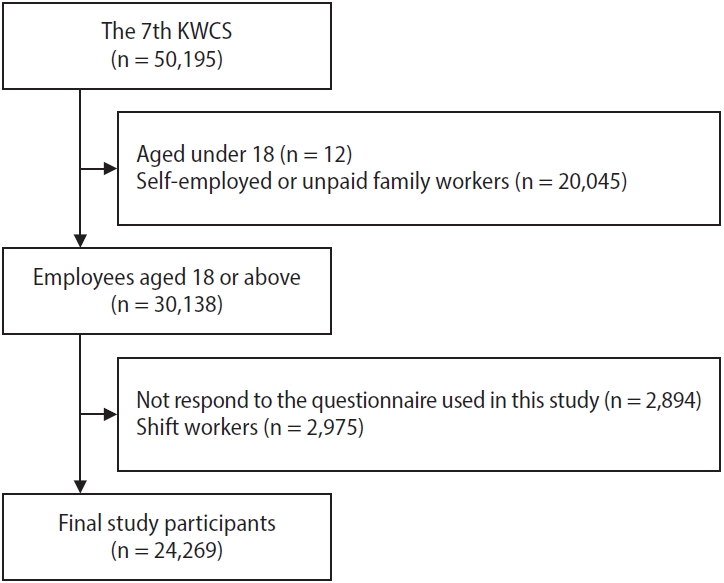
Table 1.
General characteristics of the study population
Table 2.
Proportion of dissatisfaction with work environment according to demographic characteristics, occupational characteristics, and the number of days worked ≥10 hours per day in a month (%)
| Variable | Work environment satisfaction, n (%) | p-valuea | |
|---|---|---|---|
| Satisfied | Dissatisfied | ||
| Sex | 0.001 | ||
| Male | 9,159 (82.3) | 1,973 (17.7) | |
| Female | 11,014 (83.8) | 2,123 (16.2) | |
| Age (years) | <0.001 | ||
| 18–29 | 2,135 (85.6) | 358 (14.4) | |
| 30–39 | 4,516 (87.1) | 666 (12.9) | |
| 40–49 | 4,545 (86.8) | 690 (13.2) | |
| 50–59 | 4,958 (80.8) | 1,180 (19.2) | |
| ≥60 | 4,019 (77.0) | 1,202 (23.0) | |
| Education | <0.001 | ||
| ≤Middle school | 1,851 (77.4) | 540 (22.6) | |
| High school | 5,684 (74.7) | 1,922 (25.3) | |
| ≥College | 12,638 (88.6) | 1,634 (11.4) | |
| Monthly income (10,000 KRW) | <0.001 | ||
| <200 | 4,036 (78.7) | 1,095 (21.3) | |
| 200–299 | 6,786 (81.8) | 1,508 (18.2) | |
| 300–399 | 5,494 (84.3) | 1,021 (15.7) | |
| ≥400 | 3,857 (89.1) | 472 (10.9) | |
| Occupation | <0.001 | ||
| White collar | 10,301 (90.5) | 1,081 (9.5) | |
| Pink collar | 4,656 (81.7) | 1,040 (18.3) | |
| Blue collar | 5,216 (72.5) | 1,975 (27.5) | |
| Weekly working hours | 0.001 | ||
| <40 hours | 3,943 (79.3) | 1,028 (20.7) | |
| 40–52 hours | 15,607 (84.7) | 2,820 (15.3) | |
| >52 hours | 623 (71.5) | 248 (28.5) | |
| Size of workplace | <0.001 | ||
| Small (1–9 workers) | 8,648 (80.7) | 2,066 (19.3) | |
| Medium (10–249 workers) | 9,870 (84.2) | 1,852 (15.8) | |
| Large (≥ 250 workers) | 1,655 (90.3) | 178 (9.7) | |
| Type of employment | <0.001 | ||
| Regular | 16,561 (85.1) | 2,892 (14.9) | |
| Temporary | 3,612 (75.0) | 1,204 (25.0) | |
| Days of more than 10 hours a month | <0.001 | ||
| 0 day | 19,317 (83.4) | 3,832 (16.6) | |
| 1–9 days | 639 (80.4) | 156 (19.6) | |
| ≥ 10 days | 217 (66.8) | 108 (33.2) | |
Reference categories for subsequent regression analyses were: male, age 18–29 years, ≤middle school education, monthly income <200 (10,000 KRW), white-collar occupation, <40 weekly working hours, small workplace size (1–9 workers), regular employment, and 0 days of working ≥10 hours per month.
aCalculated using the chi-square test.
Table 3.
Multiple logistic regression analysis of dissatisfaction with work environment according to the number of days worked ≥10 hours per day in a month
| Dissatisfaction with work environment | OR | 95% CI |
|---|---|---|
| Crude | ||
| 0 days | Reference | |
| 1–9 days | 1.231 | 1.030–1.471 |
| ≥10 days | 2.509 | 1.987–3.168 |
| Model Ia | ||
| 0 days | Reference | |
| 1–9 days | 1.409 | 1.172–1.693 |
| ≥10 days | 2.609 | 2.048–3.323 |
| Model IIb | ||
| 0 days | Reference | |
| 1–9 days | 1.380 | 1.145–1.665 |
| ≥10 days | 2.106 | 1.627–2.725 |
| Model IIIc | ||
| 0 days | Reference | |
| 1–9 days | 1.412 | 1.174–1.699 |
| ≥10 days | 2.484 | 1.950–3.164 |
ORs greater than 1 indicate higher odds of dissatisfaction with work environment.
p for trend < 0.001.
The outcome variable was dissatisfaction with work environment (event = 1), with satisfaction as the reference category (event = 0).
Reference category for exposure was 0 days of working ≥10 hours per month.
OR: odds ratio; CI: confidence interval.
aAdjusted by demographic characteristics (sex, age, education, and monthly income);
bAdjusted by demographic characteristics and occupational characteristics (occupation, weekly working hours, workplace size, type of employment);
cAdjusted by demographic characteristics and occupational characteristics (occupation, workplace size, type of employment) excluding weekly working hours to assess potential over-adjustment and collinearity.
- 1. Lee NR, Kim SW, Joo JH, Lee JH, Lee JH, Lee KJ. Relationship between workplace violence and work-related depression/anxiety, separating the types of perpetrators: a cross-sectional study using data from the fourth and fifth Korean Working Conditions Surveys (KWCS). Ann Occup Environ Med 2022;34:e13.ArticlePubMedPMCPDF
- 2. Lee JG, Kim GH, Jung SW, Kim SW, Lee JH, Lee KJ. The association between long working hours and work-related musculoskeletal symptoms of Korean wage workers: data from the fourth Korean working conditions survey (a cross-sectional study). Ann Occup Environ Med 2018;30:67.ArticlePubMedPMCPDF
- 3. Wong K, Chan AH, Ngan SC. The effect of long working hours and overtime on occupational health: a meta-analysis of evidence from 1998 to 2018. Int J Environ Res Public Health 2019;16(12):2102.ArticlePubMedPMC
- 4. Korea Development Institute. Comparative Analysis of Annual Working Hours among OECD Countries and Policy Implications. Sejong, Korea: Korea Development Institute; 2023.
- 5. Virtanen M, Heikkila K, Jokela M, Ferrie JE, Batty GD, Vahtera J, et al. Long working hours and coronary heart disease: a systematic review and meta-analysis. Am J Epidemiol 2012;176(7):586–96.ArticlePubMedPMC
- 6. Pega F, Nafradi B, Momen NC, Ujita Y, Streicher KN, Pruss-Ustun AM, et al. Global, regional, and national burdens of ischemic heart disease and stroke attributable to exposure to long working hours for 194 countries, 2000-2016: a systematic analysis from the WHO/ILO Joint Estimates of the Work-related Burden of Disease and Injury. Environ Int 2021;154:106595.ArticlePubMedPMC
- 7. Jung Y, Kim SJ. The effect of long working hours on mental health among Korean wage earners. Health Soc Welf Rev 2021;41(1):160–75.
- 8. Amagasa T, Nakayama T. Relationship between long working hours and depression: a 3-year longitudinal study of clerical workers. J Occup Environ Med 2013;55(8):863–72.PubMed
- 9. Nakashima M, Morikawa Y, Sakurai M, Nakamura K, Miura K, Ishizaki M, et al. Association between long working hours and sleep problems in white-collar workers. J Sleep Res 2011;20(1 Pt 1):110–6.ArticlePubMed
- 10. Kim BH, Lee HE. The association between working hours and sleep disturbances according to occupation and gender. Chronobiol Int 2015;32(8):1109–14.ArticlePubMed
- 11. Maruyama S, Morimoto K. Effects of long workhours on life-style, stress and quality of life among intermediate Japanese managers. Scand J Work Environ Health 1996;22(5):353–9.ArticlePubMed
- 12. Kobayashi T, Suzuki E, Takao S, Doi H. Long working hours and metabolic syndrome among Japanese men: a cross-sectional study. BMC Public Health 2012;12:395.ArticlePubMedPMCPDF
- 13. Singh JK, Jain M. A study of employees’ job satisfaction and its impact on their performance. J Indian Res 2013;1(4):105–11.
- 14. Ellickson MC, Logsdon K. Determinants of job satisfaction of municipal government employees. Public Pers Manage 2002;31(3):343–58.ArticlePDF
- 15. Faragher EB, Cass M, Cooper CL. The relationship between job satisfaction and health: a meta-analysis. Occup Environ Med 2005;62(2):105–12.ArticlePubMedPMC
- 16. Ali N. Factors affecting overall job satisfaction and turnover intention. J Manag Sci 2008;2(2):239–52.
- 17. Zheng H, Vatsa P, Ma W, Zhou X. Working hours and job satisfaction in China: a threshold analysis. China Econ Rev 2023;77:101902.Article
- 18. Park CJ, Yook JH, Kim MS, Lee D, Lim HM, Hong YC. The association between quality of direct supervisor's behavior and depressive mood in Korean wage workers: the 4th Korean Working Conditions Survey. Ann Occup Environ Med 2019;31:e16.ArticlePubMedPMCPDF
- 19. Repetti RL, Cosmas KA. The quality of the social environment at work and job satisfaction. J Appl Soc Psychol 1991;21(10):840–54.Article
- 20. Dhamija P, Gupta S, Bag S. Measuring of job satisfaction: the use of quality of work life factors. Benchmarking (Bradf) 2019;26(3):871–92.Article
- 21. Jaradat YM, Nielsen MB, Kristensen P, Bast-Pettersen R. Shift work, mental distress and job satisfaction among Palestinian nurses. Occup Med (Lond) 2017;67(1):71–4.ArticlePubMedPMC
- 22. Omidi L, Zare S, Rad RM, Meshkani M, Kalantary S. Effects of shift work on health and satisfaction of workers in the mining industry. Int J Occup Hyg 2017;9(1):21–5.
- 23. Ervasti J, Pentti J, Nyberg ST, Shipley MJ, Leineweber C, Sorensen JK, et al. Long working hours and risk of 50 health conditions and mortality outcomes: a multicohort study in four European countries. Lancet Reg Health Eur 2021;11:100212.ArticlePubMedPMC
- 24. van der Hulst M. Long workhours and health. Scand J Work Environ Health 2003;29(3):171–88.ArticlePubMed
- 25. Afonso P, Fonseca M, Pires JF. Impact of working hours on sleep and mental health. Occup Med (Lond) 2017;67(5):377–82.ArticlePubMed
- 26. Virtanen M, Ferrie JE, Gimeno D, Vahtera J, Elovainio M, Singh-Manoux A, et al. Long working hours and sleep disturbances: the Whitehall II prospective cohort study. Sleep 2009;32(6):737–45.ArticlePubMedPMC
- 27. Kleppa E, Sanne B, Tell GS. Working overtime is associated with anxiety and depression: the Hordaland Health Study. J Occup Environ Med 2008;50(6):658–66.ArticlePubMed
- 28. Hong Y, Zhang Y, Xue P, Fang X, Zhou L, Wei F, et al. The influence of long working hours, occupational stress, and well-being on depression among couriers in Zhejiang, China. Front Psychol 2022;13:928928.ArticlePubMedPMC
- 29. Orsini N, Li R, Wolk A, Khudyakov P, Spiegelman D. Meta-analysis for linear and nonlinear dose-response relations: examples, an evaluation of approximations, and software. Am J Epidemiol 2012;175(1):66–73.ArticlePubMedPMC
- 30. Hu NC, Chen JD, Cheng TJ. The associations between long working hours, physical inactivity, and burnout. J Occup Environ Med 2016;58(5):514–8.ArticlePubMed
- 31. Fujimoto T. Long working hours and stress: in relation to the measure against long working hours and overtime. Jpn Lab Rev 2006;3(3):23–40.
- 32. Choi BG, Cho SI, Jung HS. Explanatory models of job stress. In: Lim SY, editor. Modern Understanding of Job Stress. 2nd ed. Seoul, Korea: Koryo Medical Publishing; 2016, 41–64.
- 33. Karasek RA Jr. Job demands, job decision latitude, and mental strain: implications for job redesign. Adm Sci Q 1979;24:285–308.ArticlePMC
- 34. Wang X, Cheng Z. Cross-sectional studies: strengths, weaknesses, and recommendations. Chest 2020;158(1S):S65–71.ArticlePubMedPMC
- 35. Rosenman R, Tennekoon V, Hill LG. Measuring bias in self-reported data. Int J Behav Healthc Res 2011;2(4):320–32.ArticlePubMedPMC
- 36. Fadnes LT, Taube A, Tylleskar T. How to identify information bias due to self-reporting in epidemiological research. Internet J Epidemiol 2009;7(2):28–38.
- 37. Paulhus DL, Vazire S. The self-report method. In: Robins RW, Fraley RC, Krueger RF, editors. Handbook of Research Methods in Personality Psychology. New York: The Guilford Press; 2007, 224–39.
- 38. Park S, Kook H, Seok H, Lee JH, Lim D, Cho DH, et al. The negative impact of long working hours on mental health in young Korean workers. PLoS One 2020;15(8):e0236931.ArticlePubMedPMC
- 39. Shao Q. Does less working time improve life satisfaction? Evidence from European social survey. Health Econ Rev 2022;12(1):50.ArticlePubMedPMCPDF
- 40. Bae GS. Long working hours and working time reduction in Korea. Lab Rev 2013;2013(103):7–18.
- 41. Solem RC. Limitation of a cross-sectional study. Am J Orthod Dentofacial Orthop 2015;148(2):205.ArticlePubMed
REFERENCES
Figure & Data
REFERENCES
Citations
Citations to this article as recorded by 
 Cite
Cite XML Download
- Figure
-
- Related articles
-
- Association between urinary bisphenol levels and metabolic syndrome in Korean adults: a cross-sectional study using the fourth Korean National Environmental Health Survey
- Meaning of work in the association between traumatic events experienced and posttraumatic growth among workers in South Korea: a cross-sectional study
- The association between commute time and both presenteeism and absenteeism: a cross-sectional analysis of the 6th Korean Working Conditions Survey
- Association between workplace cooperation and depressive symptoms differs according to employment type: the 7th Korean Working Conditions Survey
- Association between sudden work recall and psychological health issues: a cross-sectional analysis of the 6th Korean Working Conditions Survey
Association between working ≥10 hours per day and satisfaction with work environment among wage workers in Korea: a cross-sectional study using data from the 7th Korean Working Conditions Survey
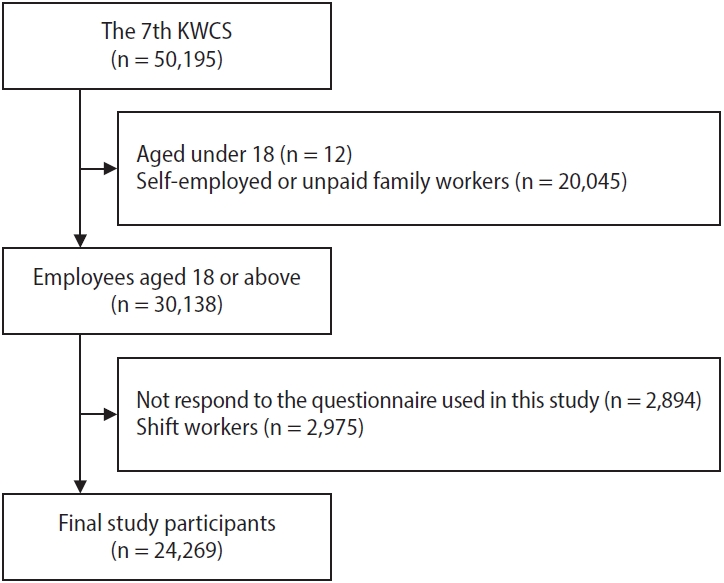
Fig. 1. Flowchart of participant selection. KWCS: Korean Working Conditions Survey.
Fig. 1.
Association between working ≥10 hours per day and satisfaction with work environment among wage workers in Korea: a cross-sectional study using data from the 7th Korean Working Conditions Survey
| Characteristic | No. (%) (n = 24,269) |
|---|---|
| Sex | |
| Male | 11,132 (45.9) |
| Female | 13,137 (54.1) |
| Age (years) | |
| 18–29 | 2,493 (10.3) |
| 30–39 | 5,182 (21.4) |
| 40–49 | 5,235 (21.6) |
| 50–59 | 6,138 (25.3) |
| ≥ 60 | 5,221 (21.5) |
| Education | |
| ≤Middle school | 2,391 (9.9) |
| High school | 7,606 (31.3) |
| ≥College | 14,272 (58.8) |
| Monthly income (10,000 KRW) | |
| <200 | 5,131 (21.1) |
| 200–299 | 8,294 (34.2) |
| 300–399 | 6,515 (26.8) |
| ≥400 | 4,329 (17.8) |
| Occupation | |
| White collar | 11,382 (46.9) |
| Pink collar | 5,696 (23.5) |
| Blue collar | 7,191 (29.6) |
| Weekly working hours | |
| <40 hours | 4,971 (20.5) |
| 40–52 hours | 18,427 (75.9) |
| >52 hours | 871 (3.6) |
| Size of workplace | |
| Small (1–9 workers) | 10,714 (44.1) |
| Medium (10–249 workers) | 11,722 (48.3) |
| Large (≥ 250 workers) | 1,833 (7.6) |
| Type of employment | |
| Regular | 19,453 (80.2) |
| Temporary | 4,816 (19.8) |
| Days of more than 10 hours a month | |
| 0 day | 23,149 (95.4) |
| 1–9 days | 795 (3.3) |
| ≥ 10 days | 325 (1.3) |
| Variable | Work environment satisfaction, n (%) | p-value |
|
|---|---|---|---|
| Satisfied | Dissatisfied | ||
| Sex | 0.001 | ||
| Male | 9,159 (82.3) | 1,973 (17.7) | |
| Female | 11,014 (83.8) | 2,123 (16.2) | |
| Age (years) | <0.001 | ||
| 18–29 | 2,135 (85.6) | 358 (14.4) | |
| 30–39 | 4,516 (87.1) | 666 (12.9) | |
| 40–49 | 4,545 (86.8) | 690 (13.2) | |
| 50–59 | 4,958 (80.8) | 1,180 (19.2) | |
| ≥60 | 4,019 (77.0) | 1,202 (23.0) | |
| Education | <0.001 | ||
| ≤Middle school | 1,851 (77.4) | 540 (22.6) | |
| High school | 5,684 (74.7) | 1,922 (25.3) | |
| ≥College | 12,638 (88.6) | 1,634 (11.4) | |
| Monthly income (10,000 KRW) | <0.001 | ||
| <200 | 4,036 (78.7) | 1,095 (21.3) | |
| 200–299 | 6,786 (81.8) | 1,508 (18.2) | |
| 300–399 | 5,494 (84.3) | 1,021 (15.7) | |
| ≥400 | 3,857 (89.1) | 472 (10.9) | |
| Occupation | <0.001 | ||
| White collar | 10,301 (90.5) | 1,081 (9.5) | |
| Pink collar | 4,656 (81.7) | 1,040 (18.3) | |
| Blue collar | 5,216 (72.5) | 1,975 (27.5) | |
| Weekly working hours | 0.001 | ||
| <40 hours | 3,943 (79.3) | 1,028 (20.7) | |
| 40–52 hours | 15,607 (84.7) | 2,820 (15.3) | |
| >52 hours | 623 (71.5) | 248 (28.5) | |
| Size of workplace | <0.001 | ||
| Small (1–9 workers) | 8,648 (80.7) | 2,066 (19.3) | |
| Medium (10–249 workers) | 9,870 (84.2) | 1,852 (15.8) | |
| Large (≥ 250 workers) | 1,655 (90.3) | 178 (9.7) | |
| Type of employment | <0.001 | ||
| Regular | 16,561 (85.1) | 2,892 (14.9) | |
| Temporary | 3,612 (75.0) | 1,204 (25.0) | |
| Days of more than 10 hours a month | <0.001 | ||
| 0 day | 19,317 (83.4) | 3,832 (16.6) | |
| 1–9 days | 639 (80.4) | 156 (19.6) | |
| ≥ 10 days | 217 (66.8) | 108 (33.2) | |
| Dissatisfaction with work environment | OR | 95% CI |
|---|---|---|
| Crude | ||
| 0 days | Reference | |
| 1–9 days | 1.231 | 1.030–1.471 |
| ≥10 days | 2.509 | 1.987–3.168 |
| Model I |
||
| 0 days | Reference | |
| 1–9 days | 1.409 | 1.172–1.693 |
| ≥10 days | 2.609 | 2.048–3.323 |
| Model II |
||
| 0 days | Reference | |
| 1–9 days | 1.380 | 1.145–1.665 |
| ≥10 days | 2.106 | 1.627–2.725 |
| Model III |
||
| 0 days | Reference | |
| 1–9 days | 1.412 | 1.174–1.699 |
| ≥10 days | 2.484 | 1.950–3.164 |
Table 1. General characteristics of the study population
Table 2. Proportion of dissatisfaction with work environment according to demographic characteristics, occupational characteristics, and the number of days worked ≥10 hours per day in a month (%)
Reference categories for subsequent regression analyses were: male, age 18–29 years, ≤middle school education, monthly income <200 (10,000 KRW), white-collar occupation, <40 weekly working hours, small workplace size (1–9 workers), regular employment, and 0 days of working ≥10 hours per month. Calculated using the chi-square test.
Table 3. Multiple logistic regression analysis of dissatisfaction with work environment according to the number of days worked ≥10 hours per day in a month
ORs greater than 1 indicate higher odds of dissatisfaction with work environment. The outcome variable was dissatisfaction with work environment (event = 1), with satisfaction as the reference category (event = 0). Reference category for exposure was 0 days of working ≥10 hours per month. OR: odds ratio; CI: confidence interval. Adjusted by demographic characteristics (sex, age, education, and monthly income); Adjusted by demographic characteristics and occupational characteristics (occupation, weekly working hours, workplace size, type of employment); Adjusted by demographic characteristics and occupational characteristics (occupation, workplace size, type of employment) excluding weekly working hours to assess potential over-adjustment and collinearity.


